Think winter means your garden goes quiet and lifeless? Think again. While leaves fall and blooms vanish, winter trees come into focus—turning your outdoor space into a serene, sculptural scene. But that’s not all. These bare beauties also power a hidden ecosystem and bring surprising benefits to your garden all season long.
Why winter trees steal the spotlight
In summer, tree foliage softens everything—like a filter in a photo. But in winter, that filter vanishes. What’s left?
Pure structure. Contrast. Art.
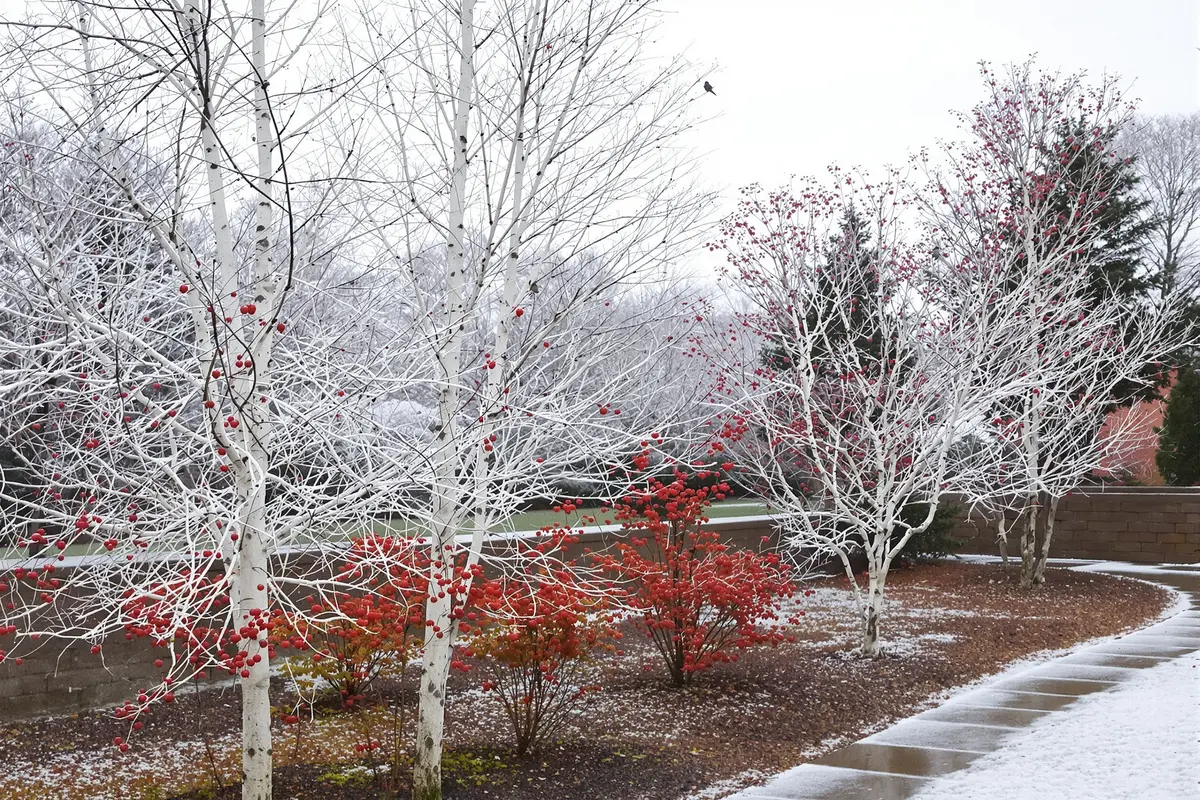
A silver birch rises like white chalk against gray skies. A crab apple drips with scarlet berries. Red twigs pop against old stone paths. Suddenly, the garden looks more focused, more alive—even without greenery. It’s not a lull. It’s another layer of beauty that you could miss if you’re not looking for it.
The secret design power of winter trees
With leaves gone, you can finally see the “bones” of your garden: arching shapes, zig-zag branches, and bold silhouettes. Garden designers know this. That’s why they often plant trees like artworks:
- Amelanchier multi-stems in a courtyard
- Japanese maple as a bold backdrop near a wall
- A row of hornbeams guiding a narrow path
These structures bring rhythm, depth, and calm—even on the dullest December day. The trick? Choose your trees not for their flowers in spring—but for their bark, shape, and berries that shine in cold months.
How winter trees support garden wildlife
Don’t be fooled by their bare appearance. Winter trees are hardworking hosts. Here’s what they’re doing behind the scenes:
- Bark shelters spiders, insects and tiny larvae
- Crevices provide homes for overwintering bugs
- Berries feed thrushes, blackbirds and waxwings
- Roots steady soil during heavy winter rains
- Branches offer perches and wind shelter for roaming wildlife
Your single crab apple or rowan can become a winter buffet for birds. Studies show that gardens with berry-bearing trees host twice as many bird species in winter compared to empty, “tidy” plots. That’s not just science—it’s sound: fluttering wings, cheerful birdcalls, and gentle rustling in the cold air.
The invisible work winter trees do
Winter trees don’t just make things look good or house wildlife. They also improve your garden’s climate. Their roots prevent erosion, soaking up excess water from winter rains. Even leafless, their canopy slows wind that would otherwise whip through your yard. And yes, they keep pulling carbon from the air, even when they look still.
This means more balanced moisture, milder frost zones, and microclimates where tender plants survive better. When you plant for winter, you’re not just decorating—you’re stabilizing and protecting your space.
How to pick the right winter tree
Start with this question: Where do you need drama in winter?
Choose trees for the view from your window, not just open spaces in your garden. Think about visible bark, fruit, and shape. Here are a few standout ideas:
- Silver birch ‘Jacquemontii’ – striking white bark for small gardens
- Paperbark maple – peeling cinnamon bark near pathways
- Crab apples like ‘Golden Hornet’ – colorful fruit in full view each morning
- Redtwig dogwood, snakebark maples, ornamental cherries – bark that gleams or stacks color into winter scenes
Visit a nursery in winter. See what grabs your eye on the gloomiest day. If a tree lights up your view then, imagine what it’ll do for your garden for the next 20 years.
Pruning: editing the silhouette
Pruning scares many gardeners, but with winter trees, it’s more like editing art. The goal? Reveal the shape, not fight it. Here’s a simple routine:
- Prune only on dry days to reduce disease
- Start by cutting away dead, crossed, or inward-growing branches
- Leave some deadwood, if it’s safe—it supports insects and birds
- Aim for character, not perfect symmetry—nature draws better than we do
Step back between cuts. Look at the tree’s silhouette against the sky. This keeps your cuts gentle and purposeful, not harsh or overdone.
Living alongside winter trees
Winter trees slowly change how you move through your space. You begin walking where branches arch overhead. You notice light hitting smooth bark in ways you missed all summer. You find yourself pausing, breathing, watching.
On a grey morning, one flash of berries can feel grounding. On sunny afternoons, icy twigs draw sharp lines in the sky. And all this requires almost nothing from you. Maybe one light prune. Maybe adding mulch. That’s it.
You don’t just “have” a tree—you experience it through the quietest part of the year. And when you look closely, you’ll see buds forming, moss spreading, and life steadily preparing for spring. It’s a rhythm all your own.
FAQ: Choosing and caring for winter trees
Which trees work best for winter beauty in small gardens?
Compact trees with standout bark or berries are ideal. Try silver birch ‘Jacquemontii’, Amelanchier, crab apples like ‘Golden Hornet’, or ornamental cherries.
Do bare trees still help wildlife?
Absolutely. Bark offers shelter, branches become nesting sites, and many still carry berries that feed birds all winter.
Can I plant new trees in winter?
Yes. Late autumn through early spring is a great time for planting bare-root or root-balled trees, as they establish well before summer heat.
How often should I prune for winter silhouette?
Once every 2–3 years is usually enough, with occasional touch-ups to remove dead or crossing limbs.
Can I create a winter scene on a balcony or patio?
Yes. Use containers with small trees like dwarf birch or Japanese maple. Pair them with shrubs that have colorful stems or strong shapes.
Winter trees aren’t background—they’re the quiet stars of your garden story. Plant one, and your view could change for decades.