When snow covers the ground and cold winds blow, food gets scarce for many birds. But for robins, winter isn’t all bleak. In fact, there’s one winter fruit that draws them in like a magnet—and bird lovers are starting to take notice.
What makes robins stay through winter?
Many birds migrate when the temperature drops, but robins often stick around, especially in milder regions. Why? Because some key food sources remain, and they’ve learned to change their diet with the seasons.
In warmer months, robins mainly eat insects and worms. But come winter, when those are hard to find, they turn to something sweeter.
The fruit robins can’t resist in winter
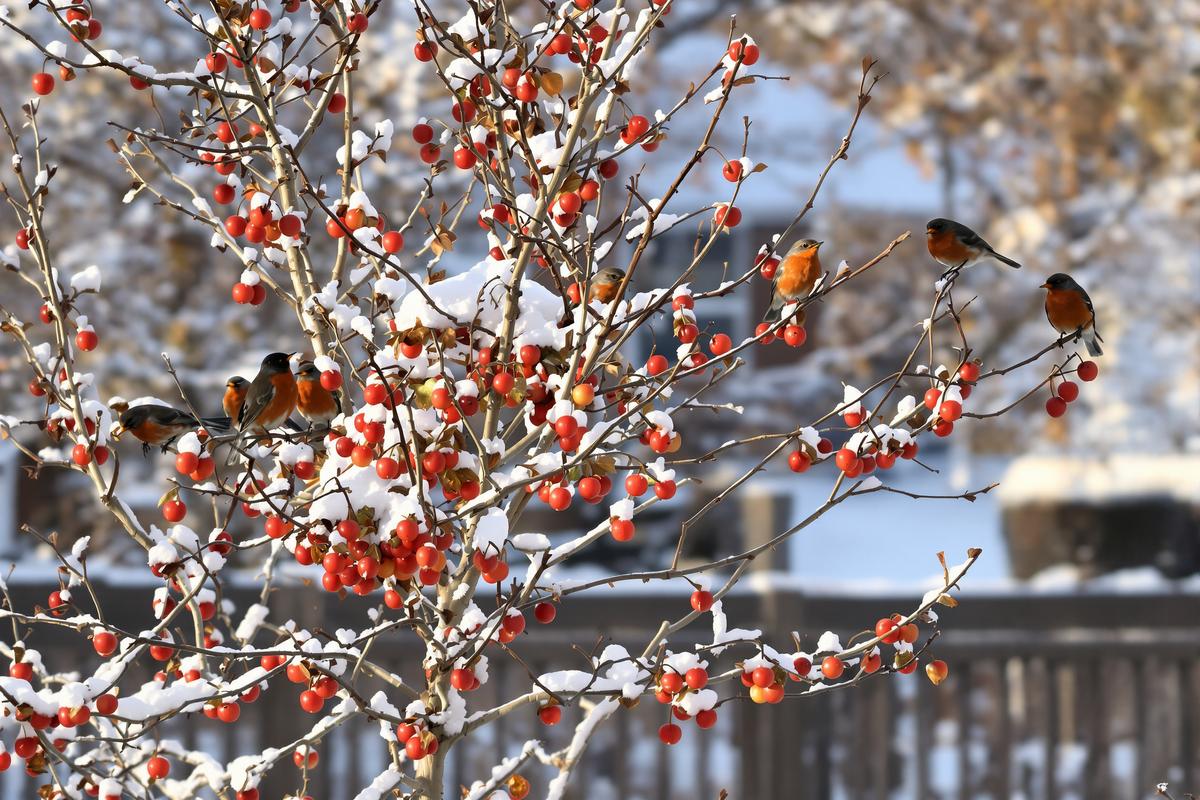
According to experienced birdwatchers, there’s one fruit robins go crazy for: crabapples.
These small fruits cling tightly to bare branches, even after the trees lose their leaves and snow blankets the ground. And for robins, that’s a game-changer.
Here’s why crabapples are their favorite during the cold months:
- High in sugar: Gives robins quick energy to fuel their bodies in freezing temps
- Stay on trees all winter: Unlike soft fruits, crabapples shrivel but don’t drop
- Easy to access: Visible and reachable without digging or foraging in snow
Even if the fruits freeze, robins will gobble them up once they thaw during warmer spells. It’s not uncommon to see a whole flock descend on a crabapple tree in early February, pecking and chirping wildly as they feed.
Best crabapple varieties to plant
If you want to attract robins—and maybe even other winter birds—planting a crabapple tree is a great idea. But not all varieties are equal when it comes to fruit that lasts deep into winter.
Birdwatchers recommend these cold-hardy varieties with persistent fruit:
- ‘Prairifire’: Bright red fruits that hold on through January and beyond
- ‘Sargent’: Compact tree, ideal for smaller yards, with loads of tiny red apples
- ‘Sugar Tyme’: Sweet-scented blooms in spring and small fruits robins can’t resist
These trees don’t just help birds. They also add beauty to your winter landscape with red fruit clusters and interesting branch shapes when everything else looks dead or dull.
How to make your yard robin-friendly
If you want to turn your yard into a refuge for winter robins, here are some simple steps:
- Plant one or more crabapple trees: Choose varieties with fruit that stay through winter
- Avoid pruning fruit too early: Let it remain on the tree until birds eat it
- Add a heated birdbath: Water is even harder to find than food in winter
- Don’t clear all fallen leaves: Robins will scratch around for hidden insects during mild spells
- Keep pets indoors or supervised: Reduce stress and danger to feeding birds
These small changes can make a big impact. A single robin-friendly tree can draw dozens of birds during the toughest part of winter.
What other birds might come?
While robins are the main fans of crabapples, they’re not the only visitors. If fruit stays long enough, you might spot:
- Cedar waxwings: Love berries and fruit, travel in stylish little flocks
- Bluebirds: Also fruit lovers, often mixed in with robins during winter
- Starlings: Not everyone’s favorite, but they’ll join in for a sweet feast
Think of it like a fruit banquet for any bird sticking it out through ice and snow.
Final thoughts
If you’ve ever wondered how to keep birds happy and active in the winter, crabapple trees may be your best solution. They’re eye-catching, low-maintenance, and provide critical food when it’s needed most.
Plus, there’s something magical about looking out on a frozen morning and seeing a robin pecking at bright red fruit. It’s a reminder that nature’s still alive and well—even when the world is quiet and covered in white.