Getting older doesn’t mean giving up your glow. If you’re tired of touching up roots every few weeks or feeling like your hair color doesn’t match the real you, there’s a fresh and freeing alternative. It’s called grey blending, and it might just be the trick that helps you look 10 years younger—without pretending to be 25.
What is grey blending and why is everyone talking about it?
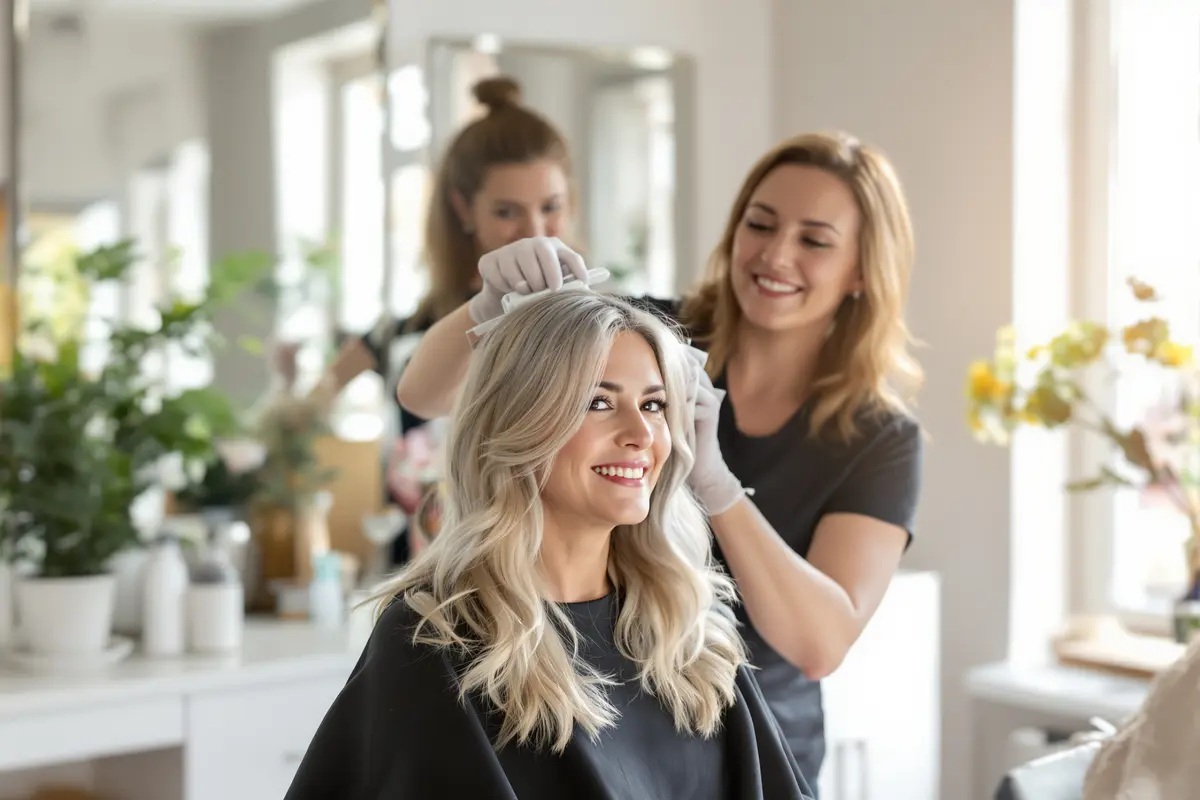
Grey blending is a hair coloring technique that mixes your natural silver strands with subtle highlights and lowlights. Instead of covering greys completely, it works with them—softening contrast, adding richness, and making your hair look multi-dimensional and healthy.
More and more people are ditching traditional full-coverage dye for a blend that looks natural, softer, and less demanding. The goal? Hair that reflects light, flatters your features, and grows out gracefully.
The key benefits of going for blended grey
Here’s why grey blending is gaining so much attention—and love:
- No more harsh root line: You won’t look like you “missed your appointment” after a few weeks
- You look brighter, not older: Face-framing lights bring life to your eyes and soften your skin tone
- It’s low-maintenance: You’ll visit the salon every 8–12 weeks instead of every 3 or 4
- It saves time and stress: No more stained towels, box dye mishaps, or chemical smells at home
- You still have color and shine: But with gentle toners and glosses instead of flat, solid dyes
So instead of chasing every silver strand with dye, you learn how to highlight it—and let it work for you.
How the process actually works
Think of it as color with finesse. Grey blending usually includes:
- Micro-highlights to lift areas around your face or where grey is most visible
- Lowlights that echo your natural shade and break up solid blocks of silver
- Root smudging to soften the line between new growth and older color
- Glossing treatments that add shine and tone without full coverage
A great stylist will study your skin tone, eye color, and hair history. Then they’ll pick gentle tones—like soft beige, mushroom brown, or cool champagne—to reflect light rather than absorb it.
Real women, real results
Women are loving the change—and it shows. One woman in Manchester, after switching from solid dye to grey blending, snapped a photo and said, “I look less tired. I haven’t even slept more.” Another said people kept asking if she’d been on vacation. They didn’t notice her color—they noticed she looked better.
Instead of hiding hair under layers of dark dye, they’re embracing a new kind of beauty. It’s not about looking younger at any cost. It’s about looking like your best self—on a good day, every day.
Can you do this if you’ve been using box dye?
Yes—but it’s smart to have a professional help you transition. When you’ve dyed with a single dark shade at home, your hair can be uneven or have “bands” of color. A trained colorist can adjust for that gradually, lightening in stages to avoid damage or patchiness.
What if you’re unsure about going grey?
You’re not alone. Many people worry that letting greys show will make them look older. But grey blending rarely makes you “look grey”. Instead, it creates a mix of light and shadow that softens your features and brings out your eyes and skin.
Even if you’re 60–70% grey, you can add lowlights and soft toners to create a look that’s deliberate, polished, and bright—not patchy or dull.
How to talk to your stylist about grey blending
You don’t need fancy terms—just clear goals. Try saying:
- “I’d like to blend, not hide, my greys.”
- “Can we go for a softer grow-out that won’t look harsh?”
- “Could we add some brightness around my face, not all over?”
- “I want to work with my natural color and keep things low-maintenance.”
And bring a few pictures—not of celebrities, but of hair that reflects your texture and current shade. That helps your stylist match the look to you.
This isn’t just a trend—it’s a mindset shift
Grey blending isn’t about giving up. It’s about stepping into a version of yourself that feels more aligned with who you are now. You’re not erasing the years—you’re showing how well you’ve worn them.
More freedom, fewer dye appointments, and more compliments like, “You look so rested.” Isn’t that what we’re all really after?
So next time you catch sight of a silver thread, don’t panic. Just pause and ask: How can I make this part of my look—not fight it?