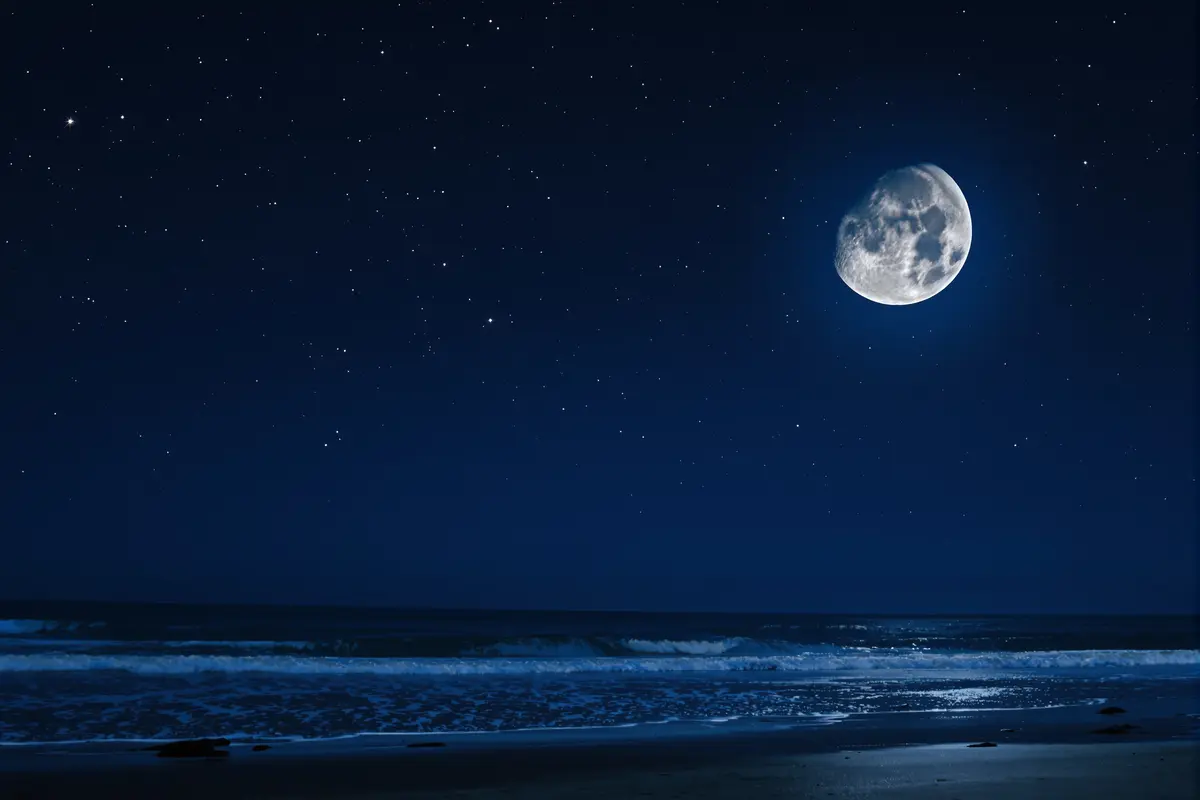
It may seem like the Moon is just hanging quietly in the night sky, rising and setting like clockwork. But in reality, it’s slowly drifting away from us—and that tiny movement is quietly rewriting Earth’s future. From the length of our days to the strength of the tides, this silent shift is reshaping our planet in ways that are both fascinating and profound.
The Moon Is Drifting Away—But How?
Every year, the Moon drifts about 3.8 centimeters farther from Earth. That’s roughly the same rate that our fingernails grow. This slow movement is driven by one powerful force: tides.
Here’s how it works. The Moon’s gravity pulls on Earth’s oceans, creating two bulges—one on the side facing the Moon and one on the opposite side. Because Earth rotates faster than the Moon orbits us, those ocean bulges end up slightly ahead of the Moon. The result? They tug on the Moon, giving it extra energy and pushing it into a higher orbit.
At the same time, Earth loses some of its spin. The same force that sends the Moon outward also slows our rotation. That means our days are getting a little bit longer—just by a few milliseconds per century right now, but over millions of years, it adds up.
Fossil Shells Reveal Ancient Time
You might be wondering, how do we know days were shorter in the past? Scientists found clues in a surprising place: fossilized shells.
Certain ancient shellfish, similar to modern clams, grew daily layers in their shells. These layers work like tree rings, except they form every day. When researchers examined fossils from around 70 million years ago, they discovered that one year back then had about 372 days. That means Earth was spinning faster, and days lasted about 23.5 hours, not 24.
Even farther back in time—some 4.5 billion years ago—a collision between early Earth and a Mars-sized object likely formed the Moon. In those days, Earth spun so fast that days may have lasted only 6 to 12 hours. The new Moon sat much closer, meaning its pull on Earth’s oceans was fierce and towering tides swept the coasts.
Spotting the Drift—With Lasers
This isn’t just theory. Scientists can measure the Moon’s drift thanks to small retroreflectors placed on the Moon by Apollo astronauts. These are like high-tech mirrors. From Earth, we fire laser pulses at them and time how long it takes for the light to bounce back. Because light travels at a constant speed, this gives a super-precise measurement of the distance between Earth and the Moon—down to the millimeter.
Those measurements, taken over decades, confirm what fossil shells already suggested: the Moon is inching away, and Earth is slowing down.
Why It Matters for Tides and Days
The drifting Moon affects more than time on a clock. It weakens tides. The Moon’s gravity is the main force behind the rise and fall of seawater we see each day. As it moves farther away, its pull grows fainter, and tides become less dramatic.
Right now, local factors like storm surges or coastline shape still create strong high and low tides. But over millions of years, the general trend points toward calmer, more stable tides. That change could severely impact marine life that depends on tidal movement to survive and find food.
Looking Ahead: Could We Ever Tidal Lock?
The Moon is already tidally locked to us—it always shows the same face. But in a far-off future, Earth could also become tidally locked to the Moon. That would mean our planet rotates just once every time the Moon orbits us—about every 27 current days.
In that scenario, the same regions on Earth would always face the Moon, and tides would “freeze” into constant bulges, never sweeping across the oceans. Life along shorelines would change completely. But don’t worry—this probably won’t happen. In fact, Earth’s oceans may vanish before we get there, evaporated over the next billion years by a brightening Sun.
Sooner Changes You Might Actually Notice
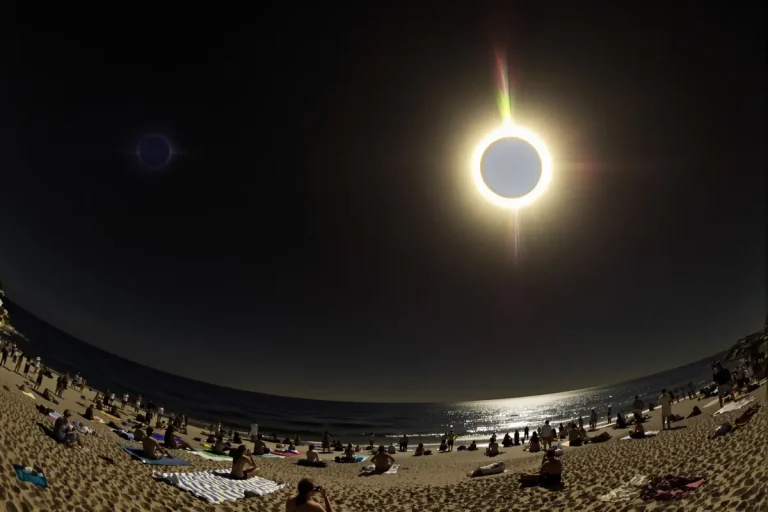
While the big changes are billions of years away, smaller ones are already underway. As the Moon recedes, it appears slightly smaller in the sky. This has a real effect on solar eclipses.
Right now, the Moon can perfectly cover the Sun, creating a total eclipse. In the distant future, it won’t be able to do that anymore. Instead, the Sun will appear as a ring around the Moon—a type of eclipse called annular. Total eclipses will eventually become impossible.
How This Knowledge Helps Scientists Today
Even tiny changes in day length or tides matter to researchers. They help us understand climate patterns, sea level changes and even how life evolved across Earth’s history. Ancient tidal marks in rock layers tell us how the planet has shifted over time—how long days were, where oceans reached, and how energy moved through ecosystems.
This also helps astronomers study other planets. When finding distant worlds with large moons, they look at how tides might affect those planets. Could they boost volcanic activity? Stir up nutrients in oceans? Stabilize a planet’s spin, making it more life-friendly?
A Changing Night Sky, A Restless Earth
When you next see a high tide roll in or watch an eclipse darken the daylight, remember: our sky is slowly changing. The Moon’s quiet journey away from Earth might not feel dramatic, but it’s steering our planet into a different future—bit by bit, year by year.
It’s another reminder that even the most familiar things—like the Moon or the ticking of time—don’t stay the same forever. They evolve. And that slow movement is part of Earth’s ever-turning story.