
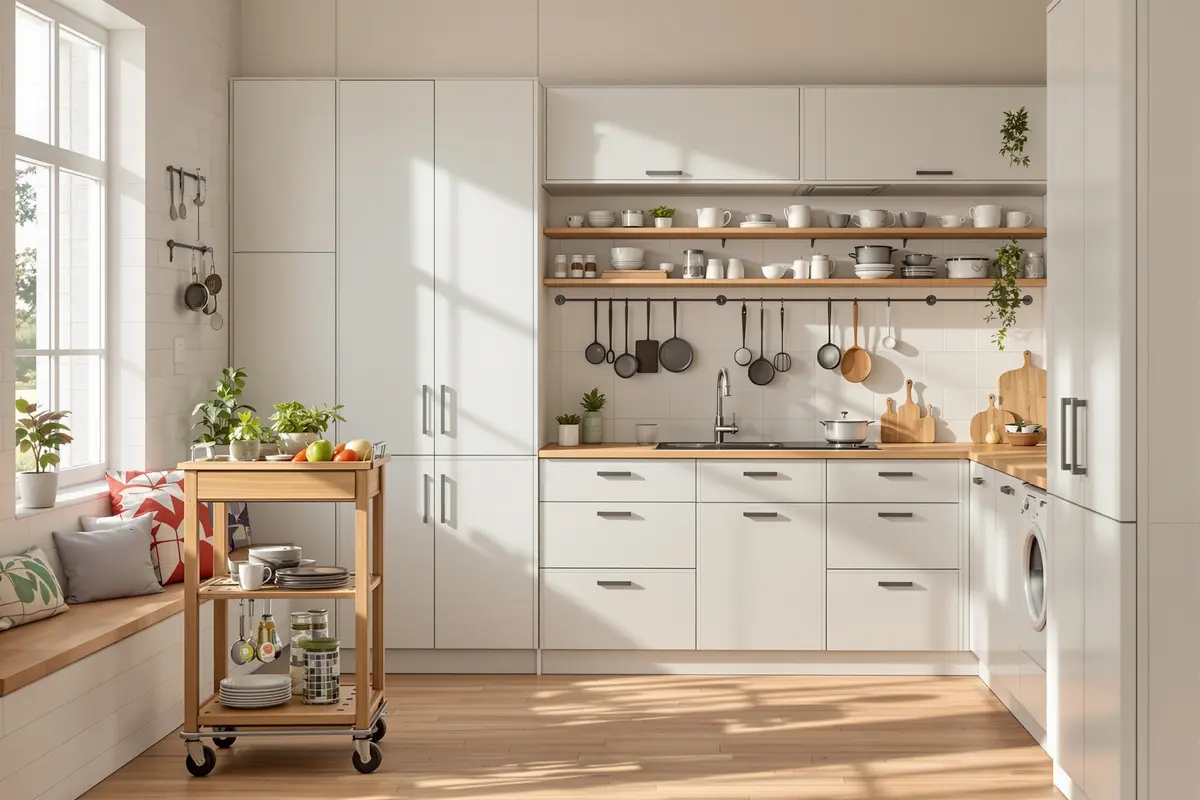
You’ve seen them in every model home: the grand marble block in the center of the kitchen, crowned with pendant lights and lined with tall stools no one ever uses. But in 2026, a quiet revolution is unfolding. Kitchens are shedding their static, heavy islands and embracing something unexpected—**light, mobile, modular storage** that transforms how we cook, live, and connect in the heart of the home.
Why the Kitchen Island Is Losing Its Grip
For years, the kitchen island was a status symbol. It looked great in real estate photos and showroom tours. But here’s the truth: it rarely worked well for everyday life. It took up space, blocked traffic, and usually ended up as a dumping ground for mail, bags, and leftovers from breakfast.
Designers and homeowners are realizing something simple yet powerful: **the best kitchens move with you**. Instead of a fixed centerpiece, today’s smart kitchens rely on flexible elements—trolleys, slim cabinets, wall rails—that free up the center of the room and make every corner more useful.
Meet the Modular Movement
This new trend isn’t about removing function—it’s about spreading it out. Imagine storage that hugs the edges of the space, leaving the center open for what matters most: walking, dancing, playing, or hosting. And it’s all done with a few clever pieces that can shift gears quickly.
- Mobile trolleys on solid wheels move from prep station to snack table in seconds.
- Shallow tall cabinets hold twice as much, without swallowing your counter.
- Wall-mounted rails keep everyday tools off the surface but always within reach.
- Low bench drawers double as storage and seating—ideal for smaller homes or busy families.
Real Homes, Better Flow
In Copenhagen, one architect broke apart a traditional island into three smaller pieces. The result? The same square meters now host more guests, cook more meals, and feel less chaotic. In Lyon, a homeowner replaced her island with zoned storage, giving everyone in the family their own “lane” in the kitchen during hectic mornings. These stories show a shift from form to function—and it’s working.
Design Tips to Go Island-Free
Thinking of ditching the block in your own kitchen? Start small. Choose a few key areas in your routine—weekday meals, hosting friends, or solo coffee breaks—and build zones around them. Here’s a simple list to get started:
- A mobile prep trolley with drawers and a lasting prep surface
- A shallow pull-out pantry wall, no deeper than your forearm
- At least one rail system for everyday tools, mugs, or baskets
- A bench-height cabinet with deep drawers—great for kids, storage, or seating
- One “wild card” piece: it might be a wine bar, a baking counter, or a mini work desk
The rule? Every piece should do at least two jobs and be able to step aside when it’s not needed.
Common Questions, Real Answers
Is losing an island bad for home resale?
Not really. Many buyers now prioritize flow and function. A modular space with smarter storage often feels more premium than a crowded island.
Can small kitchens pull this off?
Absolutely. In fact, modular setups shine in compact layouts. A wall-mounted rail, one good trolley and smart drawer zones can work wonders.
Doesn’t it feel cluttered?
No—if done right. Choose well-designed, coordinated pieces and give them clear parking spots. Think of them as moveable furniture, not random bits on wheels.
Do I need custom furniture?
Not necessarily. Many brands now sell modular systems off the shelf. Just keep finishes and heights cohesive for a clean, calm look.
Where do guests gather if there’s no island?
They’ll find the edges. A trolley half-pulled into the room or a bench along the wall draws people in—while leaving the dance floor open.
When Less in the Center Means More
The first day without a kitchen island might feel strange—like something is missing. Then it clicks. There’s space to stretch, to spin, to breathe. A friend in a wheelchair can turn easily. Your toddler zooms through with a bowl of strawberries. You roll out a yoga mat for once, right where the monolith used to sit.
Modular storage won’t win social media contests with flashy marble tops. But at 7:30 a.m., when three people reach for cereal without bumping elbows—or at 11:00 p.m., when you slide a trolley back into its nook and the room exhales—that’s when it shines.
How to Start Your Own Modular Journey
You don’t have to tear out your whole kitchen. Try just clearing the center. Remove the clutter. Roll in a cart for a week. Track how you move. See how it feels when the room flexes with you, not against you. This isn’t about chasing a trend—it’s about designing for real life, one smart, movable piece at a time.
Welcome to the kitchen of 2026: no island, no rules, just rhythm.