The age of the traditional dining table might be quietly fading—and in its place? A whole new way of living that’s smarter, softer, and far more adaptable. Across homes from Tokyo to Toronto, people are reshaping the heart of their living spaces. They’re swapping stiff dining sets for cozy platforms, rolling carts, and multi-use counters. And the results are surprisingly liberating.
Why the Dining Table Is Losing Its Shine
Let’s face it: the classic dining table is a massive presence. It takes up space, demands matching chairs, and often sits unused. In modern homes—especially smaller apartments—it just doesn’t pull its weight anymore.
The new trend comes with a simple idea: let your space shape itself around how you live, not how you think it should look. That means replacing bulky furniture with flexible zones that serve dinner, work, and downtime—without the sharp corners and constraints of a rigid table.
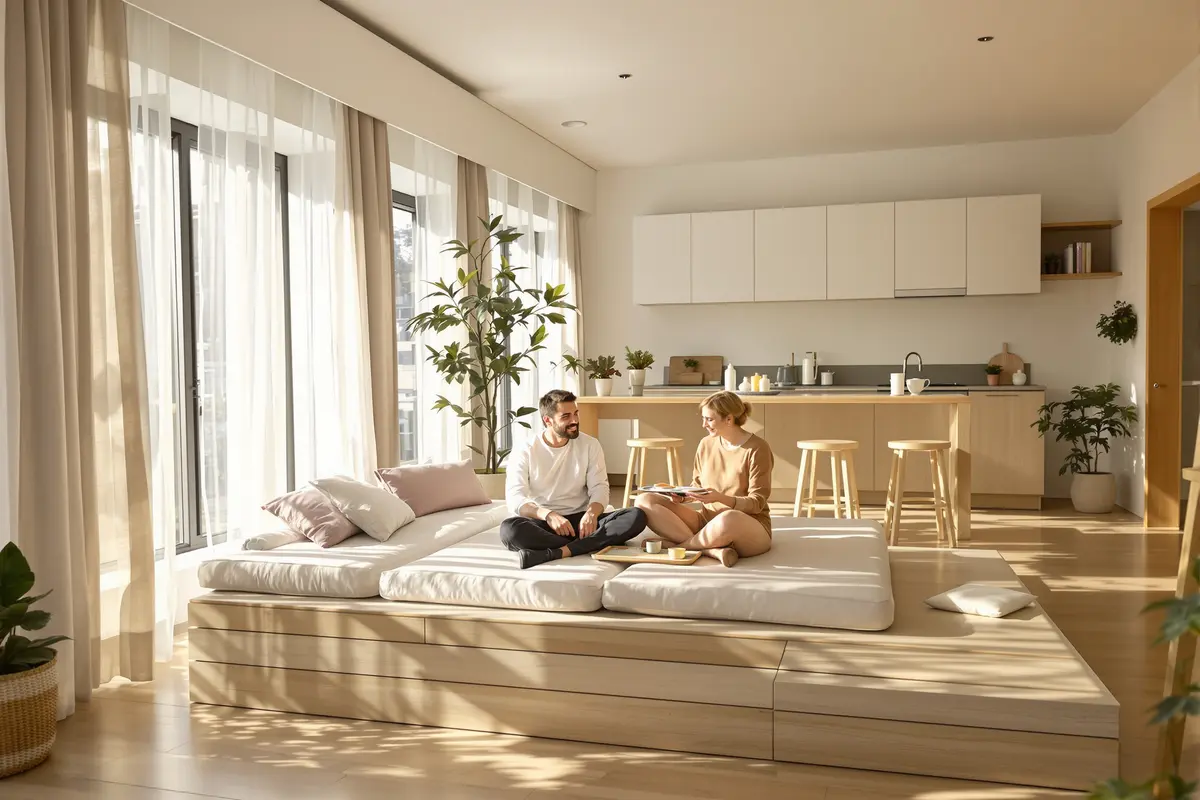
- Raised platforms with cushions for meals and lounging
- Kitchen islands that double as desks or buffet stations
- Sofas with trays for casual dining and conversation
- Mobile surfaces like trolleys and fold-out panels
In places like Berlin and Barcelona, young homeowners are making bold design choices. They’re creating “eating zones” that feel more relaxed, spontaneous, and connected—even without a dining table in sight.
What Life Looks Like Without a Dining Table
Picture this: it’s dinner in Copenhagen. No chairs, no centerpiece. Just friends sitting cross-legged on a soft platform, passing plates over trays and books. It’s casual but intentional. And it’s catching on fast.
In a tiny Barcelona flat, for example, a built-in bench with storage does triple duty: breakfast spot, lunch buffet, and movie-night nest. Every element is on wheels, hinges, or handles. Even the cutting board becomes a counter. It’s not just clever design—it’s a calm, clutter-free space that adapts all day long.
And in North America? Open-plan renovations are joining the wave. According to design surveys, up to 60% of remodels now prioritize a big island over a formal dining set. People prefer bistro stools, surface-savvy layouts, and hybrid zones that flow from work to meals to games—all without rearranging the room.
The Emotional Core: Shared Meals Without the Pressure
But here’s the catch: it’s not really about the furniture. It’s about how you feel around it. Formal dining tables carry expectations—sit straight, pass the peas, keep your elbows in. That’s fine for holidays. But everyday life? It calls for flexibility.
Psychologists say when a piece of furniture has just one purpose, it can feel like a stage. If you’re not “doing it right,” you tend to avoid it entirely. That’s why non-tables feel more welcoming. They whisper, “Pull up a cushion, bring your cereal bowl, we’re just hanging out.”
Designing Your Flexible Core
Ready to experiment? Start by observing where everyone naturally gathers. Is it the kitchen? The sofa? The balcony? Build from that center, not a catalog photo.
- If it’s the sofa: Add lift-top coffee tables or wide arms sturdy enough for dinner trays
- If it’s the kitchen: Think double-sided islands where people can face each other
- Small space? Try a fold-down wall table with stackable stools or a nesting side table set
Make it practical: keep surfaces between coffee table and desk height. Choose pieces that move easily. And never skip the emotional touches—a candle, a plant, or a soft lamp that says, “We meet here.”
Keeping the Ritual, Not the Table
The biggest mistake? Removing the table and forgetting to replace the *ritual.* Togetherness doesn’t require a wood slab and matching chairs—but it does require intention.
Make sure there’s still a daily or weekly moment when everyone gathers—on cushions, stools, or that multitalented island. One surface, two trays, a warm light: that’s enough to anchor a sense of presence.
What This Trend Really Reflects
Behind the shift is something bigger. It’s not just about space. It’s about making room for connection in a world where everything overlaps: work, rest, snacks, side projects, video chats. The old furniture script doesn’t quite fit anymore. And that’s okay.
The dining table used to be the stage. Now it’s the cast that matters more. Whether you meet on a floating platform, a movable cart, or a window seat with trays, the goal is the same: sit, eat, talk, breathe.
So take this as your invitation. One night, skip the usual spot. Try dinner on the floor with cushions or snacks around the kitchen island. No rules, no perfection. Just real connection, shaped around how you actually live.
Quick Tips to Start Your “No-Table” Life
- Pick one shared surface where 2–4 people can sit comfortably
- Have 2–3 support pieces like foldable stools or rolling trays
- Choose one anchor object (a lamp or centerpiece) that marks it as “the zone”
This isn’t about losing something. It’s about making space for what matters most. The table might go. But trust us—what it stood for can stay right where it belongs.