
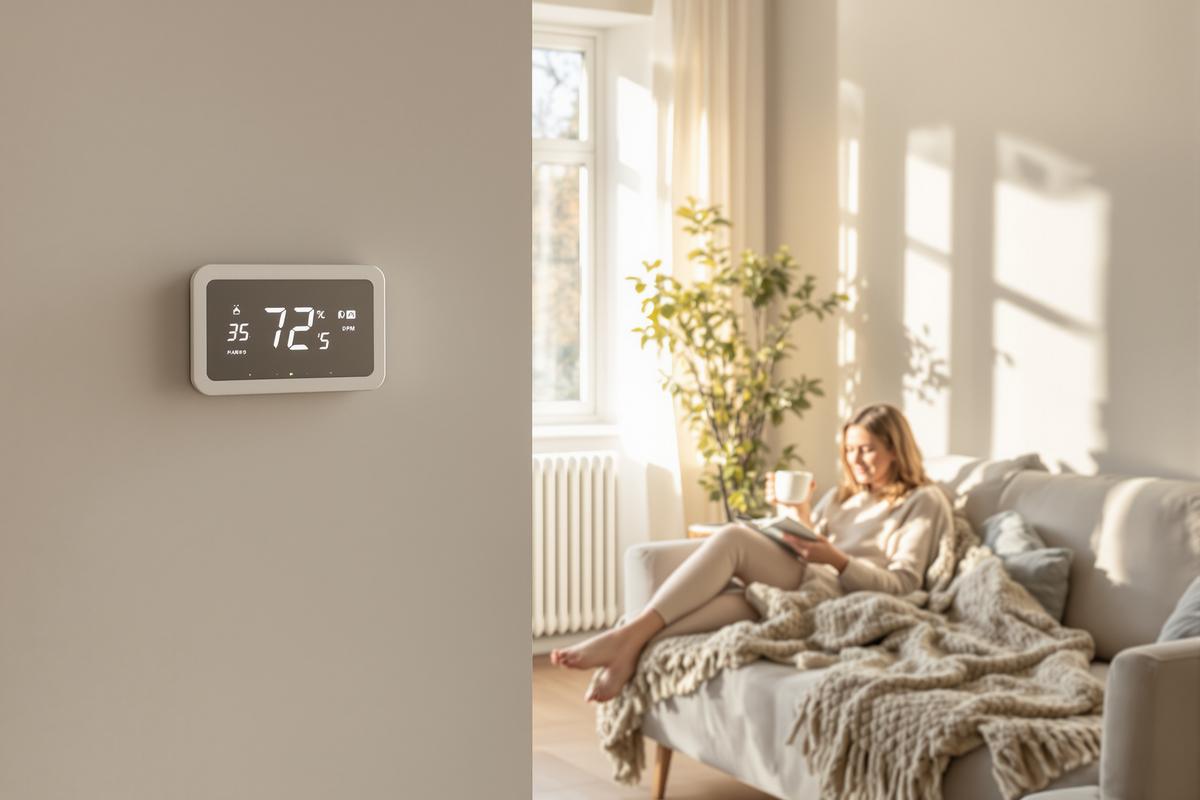
For years, we’ve been told that 19°C is the magic number for comfort and energy savings at home. But new research suggests it’s not that simple. In fact, keeping your home at a slightly different temperature may be better—for your health, your sleep, and even your wallet.
So what’s the real ideal room temperature now? Let’s break it down.
Why 19°C isn’t the golden rule anymore
The idea of keeping your home at 19°C comes from older recommendations that focused mostly on saving energy. And yes, it does help lower heating bills. But newer studies are showing that personal comfort, sleep quality and health can all suffer—especially for kids, older adults, and people with certain medical conditions.
Plus, the ideal temperature can vary depending on the time of day, your activity level, and even the room you’re in.
The new temperature range experts recommend
According to recent guidance from building and health experts, the ideal home temperature now falls between 20°C and 22°C for living spaces during the day. Here’s why:
- 20°C to 22°C helps maintain core body temperature and supports comfort without overheating.
- This range strikes a balance between energy efficiency and health standards, especially in colder months.
- People tend to move less indoors during winter, so a slightly warmer indoor space helps avoid stiffness and discomfort.
But it’s not just about daytime temperatures—nighttime matters too.
What’s the best temperature for sleeping?
Here’s where it gets interesting. If you want better sleep, experts suggest reducing the room temperature at night. For most people, the sweet spot is between 16°C and 18°C.
This cooler environment helps your body’s natural cooling process that starts when you fall asleep. It supports deeper sleep and may even reduce sweating and restlessness.
Different rooms, different needs
Not every room in your house should be set to the same temperature. Depending on room function, you can adjust to stay comfortable and make your home more energy-efficient:
- Living rooms: Keep between 20°C and 22°C
- Bedrooms: Lower to between 16°C and 18°C at night
- Bathrooms: Keep warmer—around 22°C to 24°C to avoid chills after a shower
- Hallways and entryways: These can stay cooler at 16°C to 18°C since you don’t linger there
Smart thermostats make this easier by allowing you to set room-specific temperatures and even schedule changes automatically.
How your body reacts to indoor temperature
If the air in your home is too cold, your body burns more energy trying to stay warm. That may sound good for weight loss, but it can also increase your heart rate and blood pressure. Meanwhile, if it’s too hot inside, especially in winter, dry air and overheating can lead to poor sleep, dry skin, and respiratory issues.
Sticking to the updated recommended range helps reduce stress on your system—and it just feels better.
Energy savings vs. comfort: striking the balance
Yes, raising your thermostat from 19°C to 21°C may increase your heating bill slightly. But small changes in other areas can help offset this:
- Use a programmable thermostat to automatically lower temperatures at night or when you’re away.
- Seal windows and doors to keep heat from escaping.
- Wear season-appropriate clothing indoors—socks, slippers, even a cozy sweater.
This way, you’re not choosing between comfort and cost. With thoughtful adjustments, you get both.
The bottom line: heat with purpose, not habit
Forget the rigid 19°C rule. Homes should feel good—not chilly or stuffy. By paying attention to how your body feels, and adjusting temperatures by room and activity, you can create a space that supports your health, comfort, and even your energy bills.
The new rule? Set it to suit your real-life needs, not outdated numbers.