
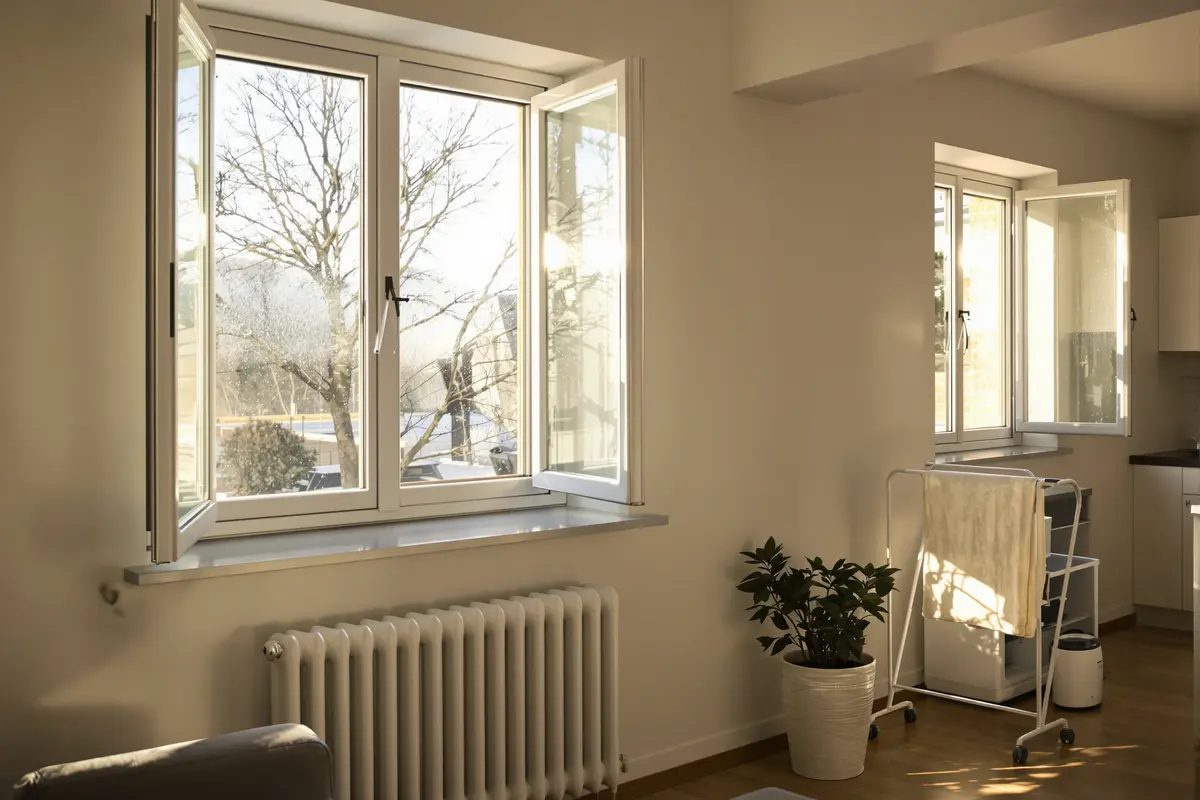
It seems like a good idea: opening up the windows on a cold winter morning to “freshen” the air. But if your glass fogs up afterward or a musty smell lingers, you may be doing more harm than good. Surprisingly, airing out your home in winter could be making mold worse – and here’s why.
The chill your walls don’t forgive
When you swing open the windows on a frosty day, the rush of fresh air can feel invigorating. But after 20 or 30 minutes, your home’s walls, floors, and furniture begin to cool down – deeply. That’s the unseen danger.
Once these surfaces lose warmth, they start acting like magnets for moisture in the air. Later, when you close the windows and go back to daily life – breathing, cooking, showering – that moisture needs somewhere to go. It lands on those cold surfaces and condenses into water droplets. That’s the perfect setup for mold growth.
Short bursts work better than long airing
Instead of airing for half an hour or more, experts recommend 5 to 10 minutes of ventilation with windows wide open in opposite rooms. This creates a fast cross-draft that replaces stuffy indoor air without cooling your home’s structure.
- Open windows in two rooms to create airflow
- Stick to 5–10 minutes per airing session
- Don’t leave a window tilted open all day – it just invites heat loss and surface cooling
These short, sharp “air swaps” are enough to refresh the air without creating cold, damp surfaces that mold loves.
The mold trap: why more airing can backfire
It’s a paradox. Cold outdoor air is usually dry, even if it feels damp. But once it mixes with warm, moist indoor air, things change. Warm air can hold more water. For a moment, the humidity drops.
Stretch that draft too long, though, and you chill your walls, bedsheets, and furniture. Hours later, your breath and daily activities release more moisture – and that moisture condenses on colder surfaces. Mold sees its moment.
Target the moisture hotspots first
Not all rooms are equal when it comes to moisture. Kitchens, bathrooms, and laundry spaces are the main offenders. That’s where condensation builds up fastest.
- Open a kitchen window right after boiling pasta or running the dishwasher
- Use your bathroom fan during and for 10 minutes after your shower
- Let laundry dry with a nearby window open, even just for a few minutes
Quick actions like these—taken at the right time—keep humidity spikes from spreading across your home.
Check the signs: your home is talking to you
Your windows, curtains, and even smells can offer warnings. Are you noticing any of these?
- Foggy windows every morning
- Black spots on corners or behind furniture
- A musty smell lingering in certain rooms
- Dehumidifier filling quickly
If yes, consider adjusting how—and when—you ventilate. The goal is not more air, but smarter air exchanges.
Make ventilation routine, not random
People who avoid winter mold tend to follow tiny, consistent habits. No heroic daily schedules. Just subtly smarter moves:
- Open bedroom windows wide for 7 minutes before bed, then close them
- After drying clothes on a rack, do a quick cross-draft
- Keep furniture a few centimeters off external walls to avoid cold spots
These are not big renovation projects. They’re light habits that keep air moving the right way, in the right moment.
Airing less—but smarter—is the real win
We often think freshness needs sacrifice: colder rooms, more sweater layers, or long ventilation. But science says otherwise.
By keeping ventilation short and purposeful, you stay warmer overall while reducing condensation. It’s easier on your heating bills and kinder to the air you breathe at night. One building expert summed it up like this:
“In winter, your job isn’t to flood the home with cold air. It’s to trade stale air for fresh air faster than moisture can settle on cold surfaces.”
Helpful checkpoints for smart winter airing
- Air for 5–10 minutes, with windows wide open
- Focus on damp-prone areas: kitchen, bathroom, laundry area
- Use fans during not just after showers or cooking
- Watch for daily fog on windows—it’s a red flag
- Leave a gap between furniture and cold walls
Winter air doesn’t have to be your enemy
This season, think less about pushing the cold air out and more about giving it a smart, useful path. A quick air exchange. Then warmth. Then comfort. Mornings feel fresher, evenings cozier, and that unsettling dampness slowly fades from your walls and your routine.