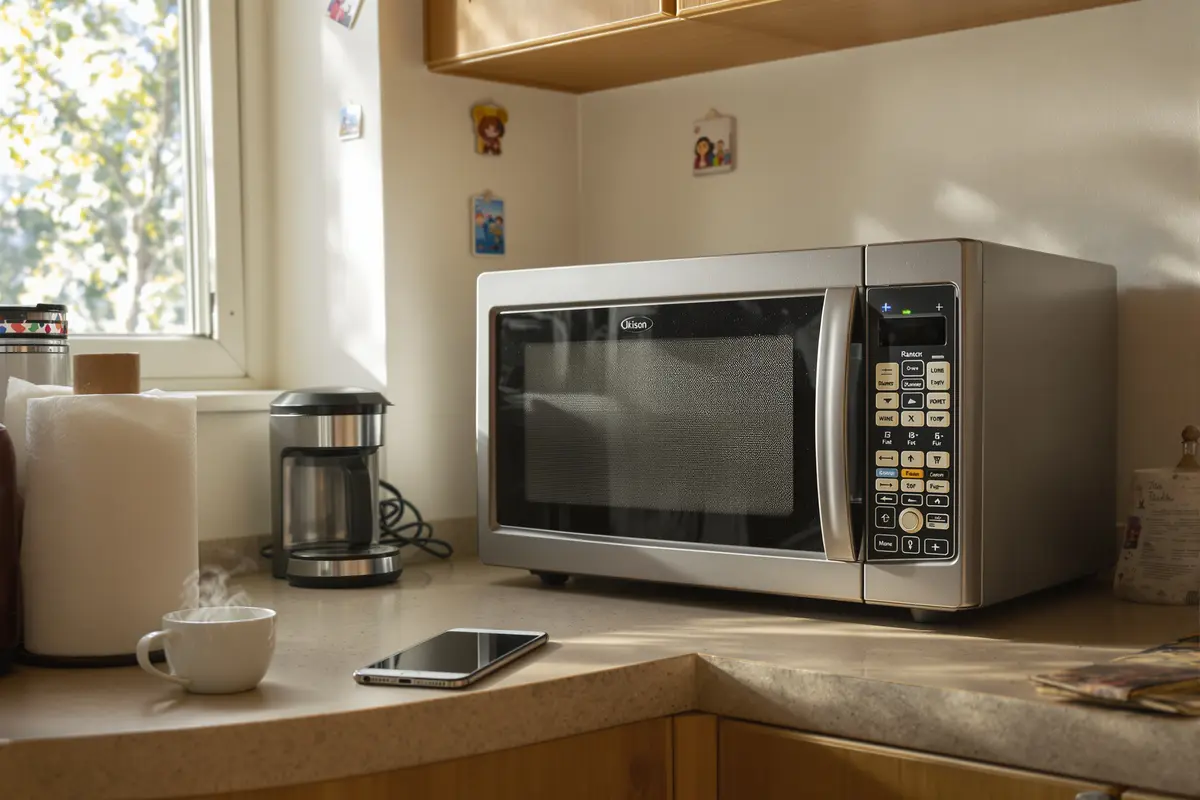
That old microwave sitting in your kitchen might seem harmless. Almost comforting, even. But what if it’s not just an outdated appliance—what if it’s quietly anchoring you to the past?
The Invisible Weight of Everyday Objects
You tell yourself it’s “still working,” and that’s reason enough to keep it. Maybe you even feel proud of how long it’s lasted. But when you strain to hear the TV over its loud hum, or reheat dinner twice because of cold spots, a quiet question lingers: why are you really holding onto it?
Often, it’s not about tech specs. It’s about memory. That older microwave might’ve seen your college nights, your first apartment, or warmed bottles in the middle of the night. Getting rid of it can feel like tossing out a piece of your timeline. But here’s the truth—holding on to the familiar can hold you back from the present.
Why You Might Be Holding On for the Wrong Reasons
Many people who keep outdated appliances have no problem upgrading phones, using smart watches, or streaming 4K movies. Yet somehow, the microwave survives for decades. Why?
- Sunk-cost fallacy: You tell yourself, “I already paid for this—why replace it?”
- Cultural resistance: You don’t want to become someone who replaces everything for no reason.
- Emotional inertia: The kitchen feels like your ground zero. Changing pieces of it shakes everything around it.
If you’ve ever said, “I don’t need all the fancy new stuff,” it might not just be about frugality. It could be a quiet kind of protest—a way of refusing to admit how much life has changed.
The Real Drawbacks of That Old Box
Beyond emotional ties, older microwaves come with real, physical costs. Hanging onto them isn’t always as practical as it feels.
- Inefficient heating: You end up with overheated edges and cold centers.
- Wastes time: You run it twice or wait longer for meals to heat.
- Higher electricity use: They often lack modern energy-efficient designs.
- Lower safety standards: Old models can omit key safety enhancements or emit excess noise and heat.
If your microwave hums like a diesel truck and flickers like a horror movie set—it might be costing you more than you think.
How to Move On Without Feeling Like You’re Letting Go
Letting go doesn’t have to mean lost memories. Instead, think of it as moving your story forward with intention. Here’s how to do it:
- Speak the memory out loud: Say what it’s meant to you. Was it from your first job? Did your kids use it?
- Ritualize the replacement: Take a picture of it in place, write down one memory, even save a magnet from that era.
- See it as an update, not an erasure: You’re not erasing your journey. You’re rewriting the next chapter with better tools.
One reader said they cried in the parking lot after buying a new microwave. But then they went home, made popcorn—and finally felt the difference.
What to Look for in a Modern Microwave
You don’t need something with every smart feature imaginable. But choosing a well-matched upgrade helps break the cycle of frustration. Consider:
- Size and capacity: Fit it to your current life—family-sized or single-serving?
- Energy efficiency: Look for updated energy ratings.
- Even heating: Newer models rarely leave you with cold cores and scorched rims.
- Sound levels: Some new tech is whisper-quiet.
- Interface comfort: Buttons and menus should feel intuitive—not like solving a puzzle.
Great tech isn’t about flash. It’s about how useful it is. Good design respects both your time and your attention.
The Deeper Lesson of Letting Go
This isn’t just about a microwave. It’s about noticing where else you’ve settled for “it’s fine.” That old appliance might be your symbol of stability—but it can also signal a fear of change.
When you replace what no longer truly serves you with something chosen—carefully, intentionally—you make space. Not just on your counter but in your mindset, too.
Let yourself grieve a little. Honor what that box meant. Then step into a kitchen that matches your present, not your past.
Quick FAQ: Are You Ready to Replace Yours?
| Is keeping an old microwave really a bad sign? | Not always—but if you cling to it while complaining about it, it may reflect resistance to change. |
| What practical drawbacks do older microwaves create? | They drain more power, heat unevenly, may be louder and less safe, and waste time. |
| How do I know mine’s expired? | If it buzzes, smells burnt, heats poorly, or skips functions—it’s past its prime. |
| Isn’t replacing appliances bad for the planet? | Only when done without thought. Upgrading to energy-efficient models can reduce your footprint. |
| How can I let go without losing the meaning? | Archive the memory. A photo or story shared is enough to preserve the meaning and start fresh. |
It’s Not Just a Microwave. It’s a Mirror.
When you keep something long past its usefulness, you’re often doing more than saving money. You might be avoiding the mirror that shows you time is passing. But that mirror isn’t your enemy—it’s your chance to align your space with your reality.
Look around. What else in your life hums along, uneven and tired, just because it used to fit? Maybe it’s time to press the stop button—and start over.