Want to grow bigger, healthier plants with less weeding and watering? Gardeners everywhere are turning to a surprising secret: cardboard. Yes—plain, brown, boring cardboard. But there’s more to this simple trick than meets the eye. When used the right way, it can seriously change how your garden grows.
Why use cardboard in your garden?
Cardboard might look like trash, but in the garden, it becomes a powerful tool. It acts like a weed barrier, moisture holder, and even worm food—all at once. And the best part? It’s free and easy to find.
Here’s how it works:
- Blocks sunlight: Cardboard stops weeds from growing by covering the soil and cutting off light.
- Traps moisture: It holds in water, keeping your plants hydrated for longer.
- Attracts worms: Earthworms love cardboard. As they break it down, they improve your soil naturally.
- Breaks down over time: That means your garden gets better every season—without adding chemicals.
How to do the cardboard trick step by step
You don’t need fancy tools or hours of work. Just follow this simple method to get started right away.
Step 1: Gather your materials
- Plain cardboard – no glossy coatings, stickers, or tape
- A garden hose or watering can
- Mulch – chopped leaves, straw, or wood chips
- Your plants or seeds
Step 2: Prepare your garden bed
Clear the area of large weeds or grass. You don’t need to remove everything—cardboard will handle most of it. Water the area lightly so the soil is moist but not muddy.
Step 3: Lay down the cardboard
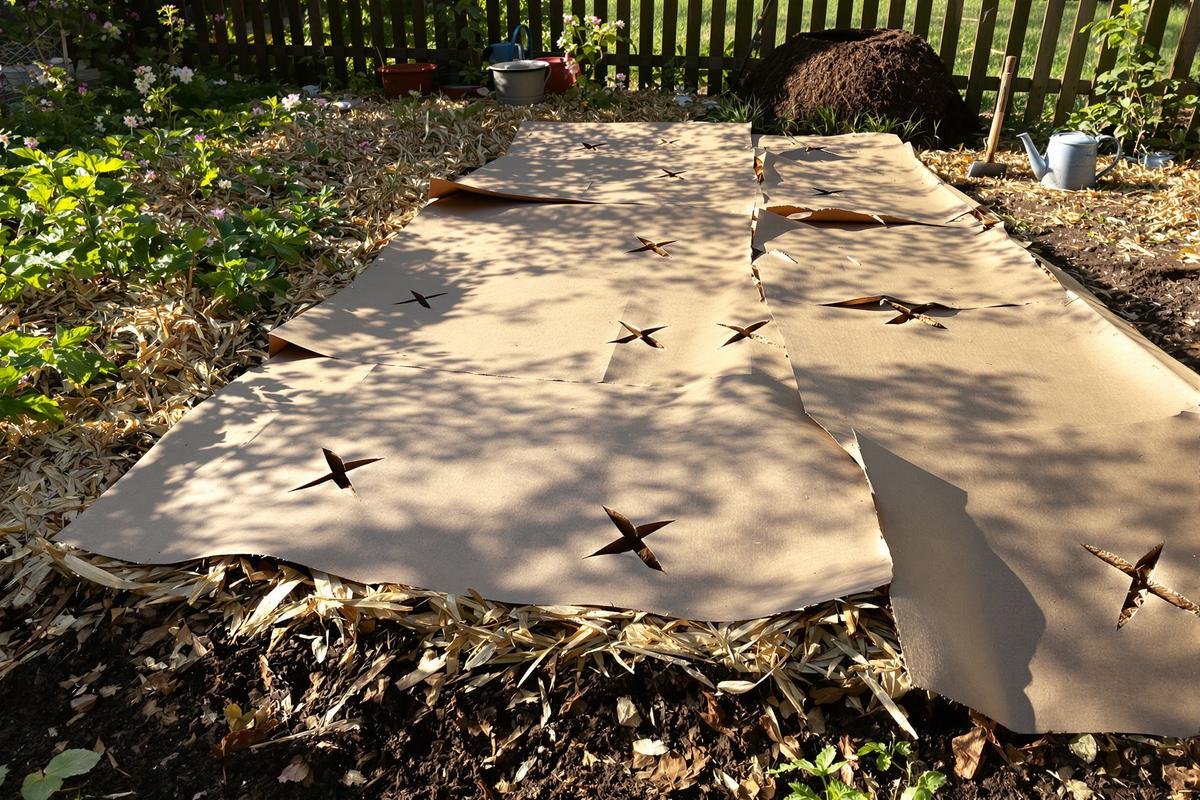
Place flat sheets of cardboard directly over the soil. Overlap the edges by at least 3 inches so weeds can’t sneak through. If it’s windy, wet the cardboard to help it stay down.
Step 4: Add mulch
Cover the cardboard with a thick layer—about 2 to 4 inches—of mulch. This helps hold the cardboard in place and looks tidy. It also boosts the cardboard’s ability to keep water in the soil and keep weeds out.
Step 5: Cut holes for your plants
Plant right through the cardboard! Cut X-shaped holes where you want each plant to go. Gently fold back the flaps, dig your hole, and place the plant. Fold the cardboard back around the stem to keep weeds from creeping in.
When and where to use this trick
Cardboard works almost anywhere in your garden. Use it in:
- Vegetable beds – to start a weed-free growing season
- Flower borders – place cardboard and mulch around established plants
- Walkways – lay paths with cardboard and mulch underfoot to prevent grass from growing back
It’s especially effective in early spring or fall, when you’re prepping new planting areas or giving old beds a boost.
Why gardeners swear by it
This isn’t just a random hack—it’s a trusted method used by organic growers and home gardeners around the world. It saves time, it uses free materials, and it gets real results that you can see.
One gardener in Ohio said their tomato harvest doubled after just one season of using cardboard under their raised beds. Another in Texas used the trick to reclaim a weedy patch of yard—and turned it into a thriving wildflower meadow.
Important tips and things to avoid
To make sure your cardboard trick really pays off, keep these tips in mind:
- Only use non-coated cardboard: Avoid boxes with shiny ink, waxy layers, or plastic tape.
- Remove tape and labels: These don’t break down and could harm the soil.
- Don’t pile soil on top: Soil can block airflow and slow decomposition too much. Stick with mulch.
- Don’t use too many layers: Two layers of cardboard are usually enough. Too many can block water from getting through.
Try it and watch your garden thrive
What makes this trick so exciting is how simple it is. With just a few pieces of cardboard and some mulch, you can change the way you garden—saving time, effort, and water. Best of all, your plants get the boost they need to thrive.
So next time you’re about to toss that delivery box, think twice. Your best harvest might be hiding inside.