In the quiet chill of winter, when leaves have fallen and gardens go still, something amazing happens—robins gather. But what keeps them around when most other birds head south? Birdwatchers have noticed a surprising key to these bright red chests sticking around: one particular winter fruit. And yes, it’s probably not the fruit you’re thinking of.
The winter scene: fewer bugs, fewer options
During winter, food gets scarce. Insects vanish. Seeds get buried under snow. Yet some birds, like robins, don’t migrate as far as you’d expect. Instead, they switch up their diet. They go from catching worms to hunting down fruits.
Robins are especially drawn to certain types of winter berries during these colder months. But among crabapples, sumac, and dogwood berries, there’s one fruit that stands out—the American holly berry.
The surprise favorite: American holly berries
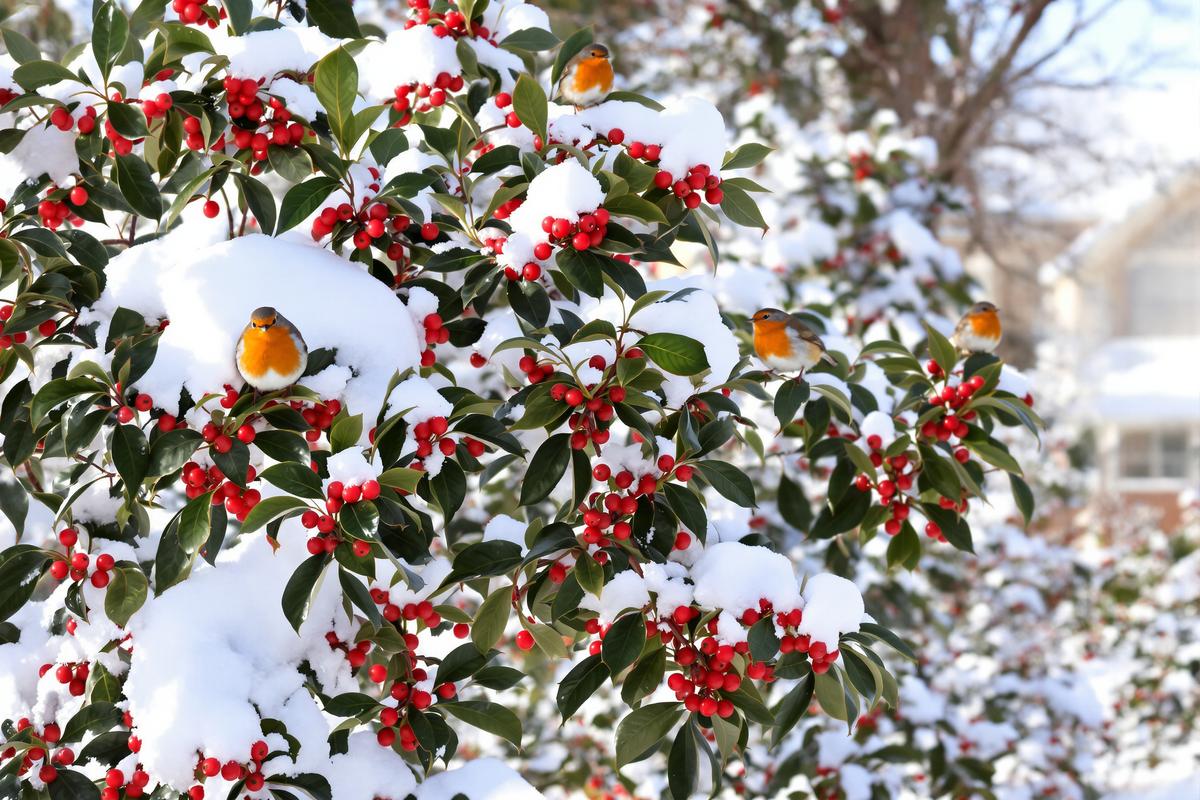
That’s right. Robins love American holly. These berries may not look tasty to us, but they’re a winter jackpot for birds. Unlike other fruits that rot early or fall off, holly berries stay on the branch deep into winter.
And when snow finally arrives, guess what the robins go for? The bright red clusters on holly trees. It’s like they can’t help themselves. In fact, some birders report flocks of robins stripping entire trees of their berries in a single day.
Why holly beats other winter fruits
Sure, there are other options. But here’s why holly keeps robins coming back:
- Late-season ripening: The berries peak when other food is gone. That makes holly trees almost irresistible in mid-winter.
- Easy to spot: Those bright red berries pop against snow and dark green leaves, helping robins find them quickly.
- Energy-rich fuel: The berries may not be sweet, but they’re packed with calories robins need to survive cold days.
- Safe from rot: Holly berries don’t spoil fast, meaning robins can rely on them for weeks.
Compared to crabapples, which turn mushy, or privet berries, which are less nutritious, holly is almost the perfect food for staying strong and warm.
How to attract robins to your yard this winter
If you want a flurry of red-breasted visitors in your backyard, there’s one simple step: plant holly trees. Or at least, make sure you’re preserving them.
Here’s how you can turn your yard into a robin haven:
- Choose American holly (Ilex opaca): This native plant is a favorite among many bird species, not just robins.
- Plant both male and female hollies: Only the females produce berries, but they need the males to pollinate.
- Don’t over-prune: Robins prefer dense trees they can perch in safely.
- Avoid pesticides: Chemicals can reduce other food sources like insects once spring returns.
Bonus tip? Add a heated bird bath nearby. Fresh water in freezing temps is like a magnet for robins.
Other birds love holly, too
While robins are the most active berry gobblers, they’re not alone. You’ll often spot cedar waxwings, mockingbirds, and bluebirds joining the feast. So if you plant holly, you’re not just feeding one bird. You’re supporting a whole winter ecosystem.
One tree, many surprises
Holly isn’t just a Christmas decoration. It’s a survival tool for winter birds. It’s beautiful, low-maintenance, and feeds a variety of wildlife when they need it most. No wonder birdwatchers are so into it.
So next time you see a robin in the snow, look around. If there’s a holly tree nearby, chances are that’s why it’s sticking around. And if you don’t have one yet—well, you’ll know exactly what to plant this spring.