
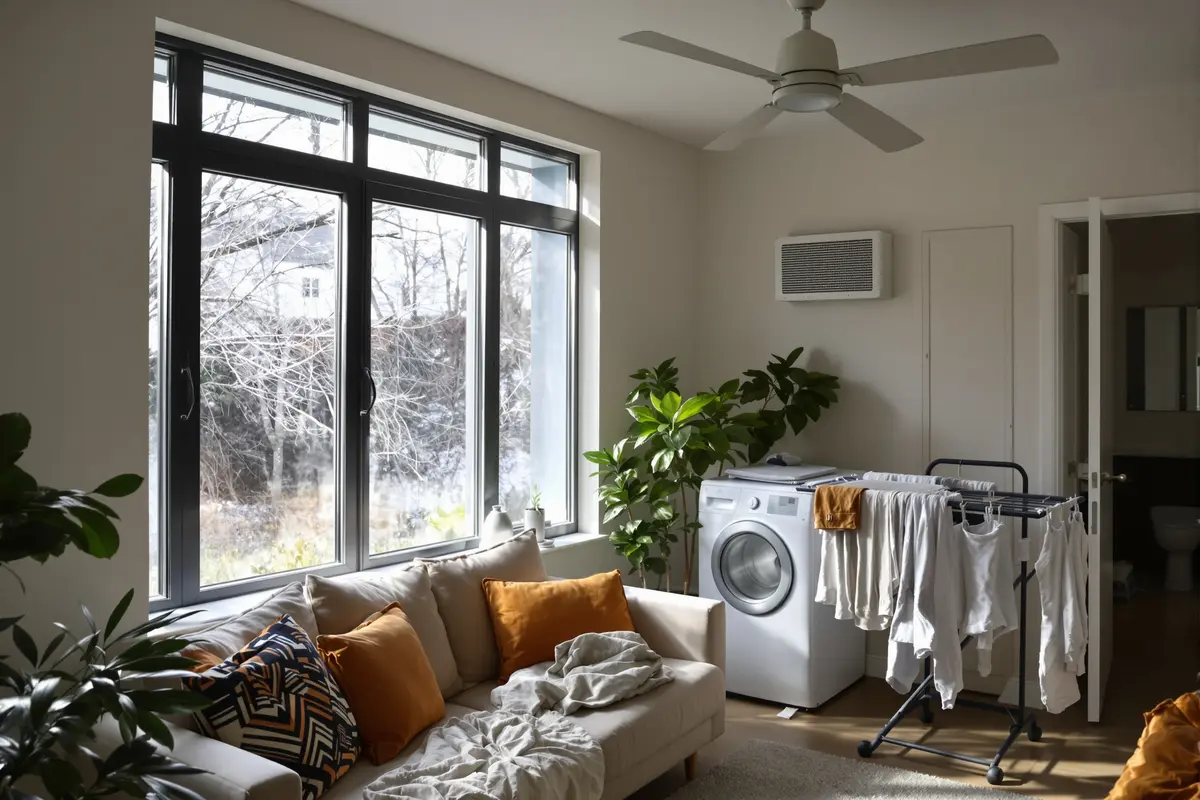
Ever noticed how your home smells a bit “off” in the winter—even when it’s clean? You walk in and there’s no visible mess, yet the air feels dull, tired, and kinda heavy. That’s not just your imagination. There’s a reason for it, and a simple fix that most people miss.
Why winter air feels stale—even in a spotless home
In cold months, we shut our doors and windows tight. It makes sense—we’re trying to keep the warmth in. But that cozy seal also traps everything inside: cooking smells, moisture from showers, damp laundry, pet odor, and even body scent. Over time, all those things pile up in the air.
Unlike summer, when we naturally open windows and let breezes flow through, winter keeps our homes on lockdown. And those smells? They just circulate. The heating system dries the air but doesn’t remove the particles. It’s like living inside a jar that never gets opened.
One UK study found that indoor air in winter can be up to five times more polluted than city air outside. Crazy, right? And it all builds gradually—until one day, you suddenly realize your place smells more like damp laundry and old dinners than fresh linen and light.
Insulation helps warmth—but hurts air flow
Modern homes are airtight for energy efficiency. That’s great for your heating bill, but not so great for air quality. Warm air and odors get locked in. Cleaning might remove dirt, but it can’t pull stale vapor out of your furniture or walls.
Why it gets worse in winter:
- We dry laundry indoors, often in shared spaces like the living room
- Hot showers increase humidity, especially with doors closed
- Cooking hearty meals like stews creates heavier, long-lasting smells
- Doors stay shut, and fans often go off too soon
The result? A lingering, musty air that makes your home feel smaller and more stuffy.
The fix you’re probably overlooking
Here’s what most people don’t realize: airing out your home isn’t about swinging windows wide for half an hour. It’s about small, steady air changes that happen regularly.
Think of it like your lungs. You don’t take one deep breath in the morning and hold it all day, right? Your home needs those same gentle breaths—exchanging tired, moist air for fresh, dry air in short, regular bursts.
Simple ways to refresh your air (without freezing)
- Use your extractor fans longer: Let bathroom and kitchen fans run for 15–20 minutes after showers or cooking. That’s when the real moisture sticks around.
- Open trickle vents: Those small slots at the tops of windows? Many homes have them already—just slide them open. They keep a low-flow air exchange going all day.
- Do ‘mini air swaps’: Open two windows on opposite sides of your home slightly for 5–10 minutes. Cross-ventilation quickly refreshes indoor air without letting the place freeze.
- Dry laundry in one room, with a window cracked slightly—or use a vented dryer if possible. Avoid damp clothes scattered across multiple rooms.
- Watch your humidity: Aim to keep indoor humidity between 40–60%. Too much moisture in the air makes smells “stick” to fabrics and walls.
What about candles and sprays?
They smell nice at first, but they’re just covering the problem. In fact, they can add to the mix, layering synthetic perfume onto already tired air. The stale smell usually returns once the candle burns out or the spray fades.
If you want your home to smell truly fresh, you need to let some of the tired air go—and humidity with it. That’s what gives your house a clean breath again.
Common questions, answered
Why does my house only smell stale in winter?
Because in winter, you trap everything inside: heat, moisture, odors. Summer flows air naturally through your home; winter locks it all in place.
Isn’t opening windows wasteful when it’s cold?
Not if done right. Short bursts of cross-ventilation swap air fast, without cooling down the house entirely. Most heat stays stored in walls and furniture, so the place warms up quickly again after.
How long should I run my fans?
At least 15–20 minutes after steam-heavy activity like cooking or showering. Otherwise, particles just settle back inside your home.
I live in a polluted city. Should I open my windows at all?
Yes—but choose quieter times, like very early or late in the day. Pair that with a HEPA-grade air purifier indoors to protect from fine particles while still letting out stale, humid air.
Fresh doesn’t mean drafty
You don’t have to live with cold floors and take a hit to your heating bill to enjoy clean-smelling air in winter. Ventilation isn’t the enemy of comfort—it’s a secret partner to it. Stale, humid air makes rooms feel chilly and damp, nudging you to turn up the heat. In contrast, drier air from a quick vent can actually feel warmer.
Clean air isn’t something you see—but you feel it. In your mood, your energy, even how proud you are of your space. That dull winter funk? It’s optional. And now, you know exactly how to clear it out. No sprays required.