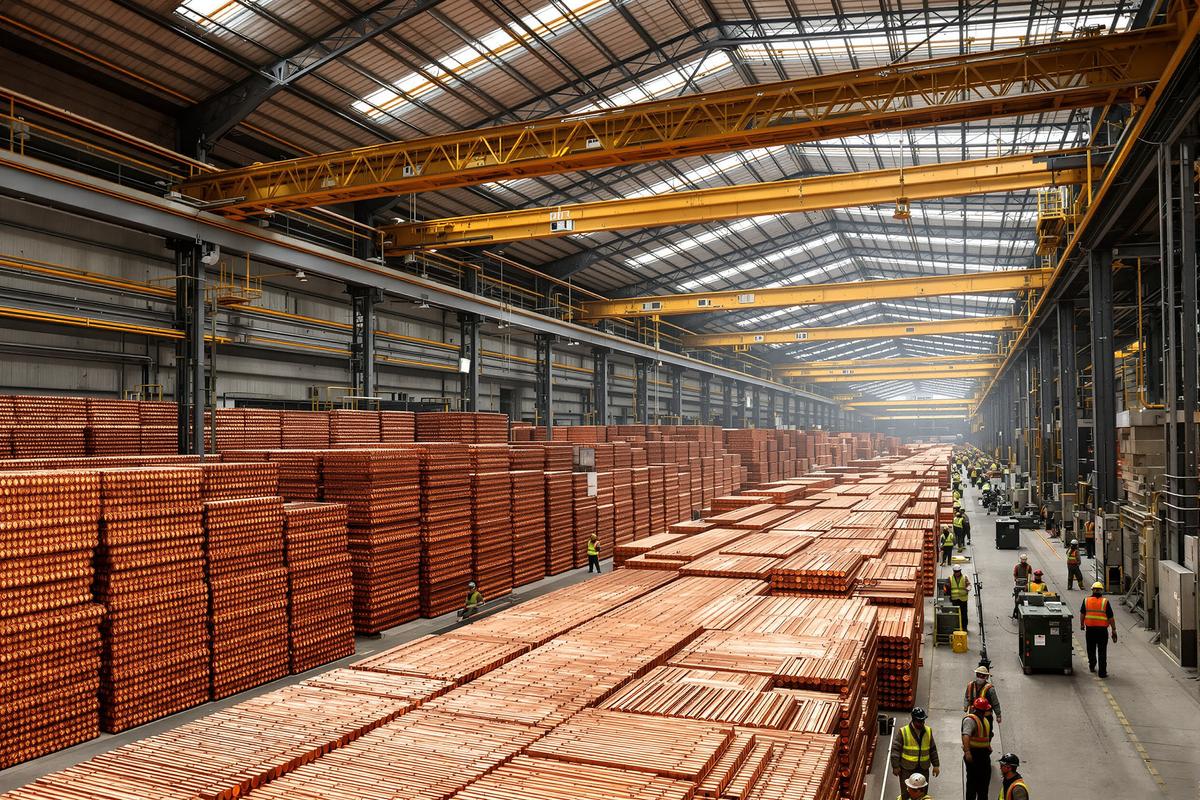
China’s presence in the global copper market isn’t just large—it’s becoming impossible to ignore. Over the past two decades, the country has moved quietly but steadily to dominate an essential metal that powers everything from smartphones to solar panels. And now, it’s clear: the world can’t function without China’s grip on copper.
Why copper is more important than ever
Copper is often called “the metal of electrification.” It’s used everywhere—in electric vehicles, wind turbines, data centers, and new housing developments. As countries push for greener power, demand is soaring. Think about this: a traditional gasoline car needs around 20 pounds of copper, while an electric vehicle needs more than 180 pounds.
And it’s not just cars. Every solar panel, phone charger, and home battery system depends on copper wiring or components. So, whoever controls copper… controls a key piece of the future.
China’s copper strategy: bold and quiet
While other nations have debated green transitions, China has acted. Rather than just buying copper, it’s invested deeply across the supply chain. This includes:
- Owning or financing copper mines in countries like Chile, Peru, and Zambia
- Controlling global smelting capacity—China now handles nearly 40% of world’s copper refining
- Stockpiling copper at times when prices fall, giving it pricing leverage
This strategy has given China both physical and financial control. Even companies based in the U.S. or Europe often depend on Chinese refiners to turn raw copper into usable form.
The global dependence few want to talk about
Behind the scenes, many Western manufacturers are facing a tough reality. They can’t shift to clean energy or scale up tech production without steady copper supplies—and many of those routes lead back to China.
Recent supply chain disruptions showed just how fragile things are. A small delay at a Chinese port or smelter can ripple across the globe. And with copper prices up over 100% since 2020, disruptions can mean serious costs.
Even more, China’s refining expertise is unmatched. Its facilities are newer, more efficient, and better integrated with local industries. Competing means catching up in both volume and capability—something that takes years or even decades.
Can any country break free?
Some are trying. The U.S. and EU have launched funding for domestic copper mining and refining. There are plans to rereopen mines in Arizona, and new projects are being considered in Scandinavia and Canada. But hurdles remain:
- Environmental regulations slow or block new mining projects
- High costs make refining unprofitable without government support
- Lack of skilled labor and infrastructure in key areas
Meanwhile, China continues building new partnerships and funding copper projects abroad. In Africa, Chinese firms are now involved in more than a dozen new copper mines. These long-term contracts ensure supply—even if prices or politics shift.
So what comes next?
It’s a tense balancing act. Countries want to move away from dependency, but they also need fast access to copper to keep up with electric goals. This leaves them in a tricky spot: work with China, or risk falling behind.
For now, industries like EV production, clean energy, and high-tech electronics will remain tied to Chinese copper supply. And unless there’s a major breakthrough in alternative materials or recycling, that likely won’t change soon.
If you’re wondering how one country became so essential to the world’s plans for the future—the answer isn’t flashy. It’s copper. And China’s been quietly planning this move for years.