On 25 July 2028, the skies over parts of Earth will turn dark in the middle of the day. Not for a few seconds, but for over six astonishing minutes. This won’t be your average eclipse — it’ll be the longest total solar eclipse of the 21st century. If you’ve never seen one before, this is the one not to miss.
What’s so special about this eclipse?
Eclipses happen regularly, but long total eclipses like this one are rare. This one stands out for a powerful reason: over six minutes of total darkness in the middle of the day. That’s a much longer view of totality than usual.
To see that full effect, though, you’ll need to be in just the right place. The eclipse will follow a narrow line across parts of Europe, northern Africa, and nearby oceans. If you’re even a little outside that path, you’ll miss the moment when the day turns into night.
When and where does it happen?
- Date: 25 July 2028
- Time: Midday to early afternoon (time depends on your location)
- Totality duration: Over six minutes at maximum
- Best viewing locations: Towns and cities along the eclipse path in southern Europe and parts of Africa
This is a global event. But only a thin corridor will experience the total eclipse. Standing under that shadow puts you in the center of a moment that’s hard to describe but impossible to forget.
What does it feel like to witness totality?
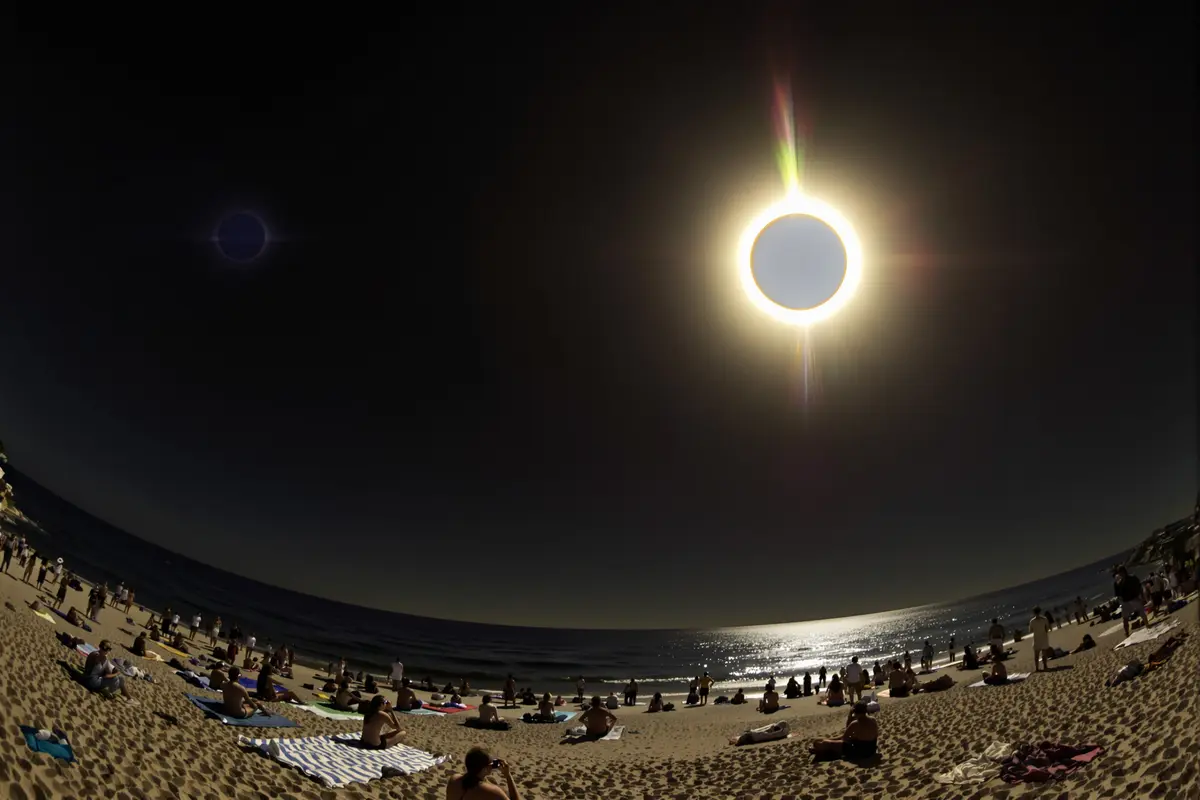
Imagine standing on a beach in the middle of summer. People laugh, vendors shout, and the heat is intense. Then, slowly, the light fades. Birds fall quiet. The air cools. Strange colors appear along the horizon — like sunset, but all around you. For more than six silent minutes, the Sun disappears completely.
People gasp, cry, or stare in awe. Even cities stop buzzing. It doesn’t just look different — the eclipse changes how you feel. This isn’t just a visual event. It’s emotional, even spiritual.
Tips to prepare for the big day
Seeing a total eclipse isn’t just about showing up. To truly experience it, you need to plan ahead. Here’s how:
- Pick your viewing spot early. Use NASA’s eclipse maps to find the path of totality.
- Book travel and hotels far in advance. Places along the path will get crowded.
- Buy ISO-certified eclipse glasses. Don’t wait and definitely don’t buy random ones on the day of.
- Check local weather forecasts. Cloudy skies could ruin your view.
- Test your phone or camera setup. Do it the day before so you’re not fumbling during the moment.
- Plan to put your devices down. Experience at least one minute with just your eyes and ears.
The most common mistake people make is thinking they can just step outside and see everything. But if you’re not in the right spot or don’t have proper eye protection, you might miss the best few minutes of the decade.
What if you’re not in the path of totality?
You’ll still see a partial eclipse in many parts of the world, including much of Europe and Africa. It can be impressive, but it won’t go completely dark. To witness that spine-tingling moment when midday feels like midnight, you’ll need to travel into the path.
Why this eclipse matters beyond science
Astronomers track eclipses for research. But for most of us, what stays with us isn’t the facts — it’s the feeling. That moment when crowds go quiet, the air cools, and the stars peek through at lunchtime. Some will cry. Others will smile and look up with wonder.
Every eclipse leaves a story. A kid who decides to study space. A couple who shares the moment and never forgets. A lone traveler who sees their world differently afterward. These personal moments matter just as much as the data.
Last-minute reminders
Bookmark this checklist:
- Date: 25 July 2028
- Get eclipse glasses early
- Mark your viewing location on a map
- Check the time of totality in your area
- Travel the day before to avoid traffic stress
Think of this as more than an event. It’s a rare moment to feel something bigger than yourself. For over six minutes, the rules of the day shift — and it’s your chance to be right there when the dark rolls in.
After the eclipse
Most of us won’t remember the album we were listening to the week before or what we had for lunch that day. But we’ll remember how cold the air got when the Sun vanished. How strange the shadows looked. How everyone looked up, together.
And years from now, when someone mentions eclipses again, you might smile and say: “You think that was something? You should’ve seen 2028.”