One small kitchen accident led to an unbelievable fix—no plumber, no expensive tools. Just a household ingredient that quietly cleared a major clog. Sounds too simple? That’s exactly why it’s so fascinating.
The kitchen sink mystery that started it all
It was just another evening. Dishes piled high, fatigue settled in, and the sink? Completely clogged. Water wouldn’t move. Grease and food particles from last night’s meal sat still, refusing to budge. She tried everything—hot water, a coat hanger, yes, even a mini plunger. Nothing worked.
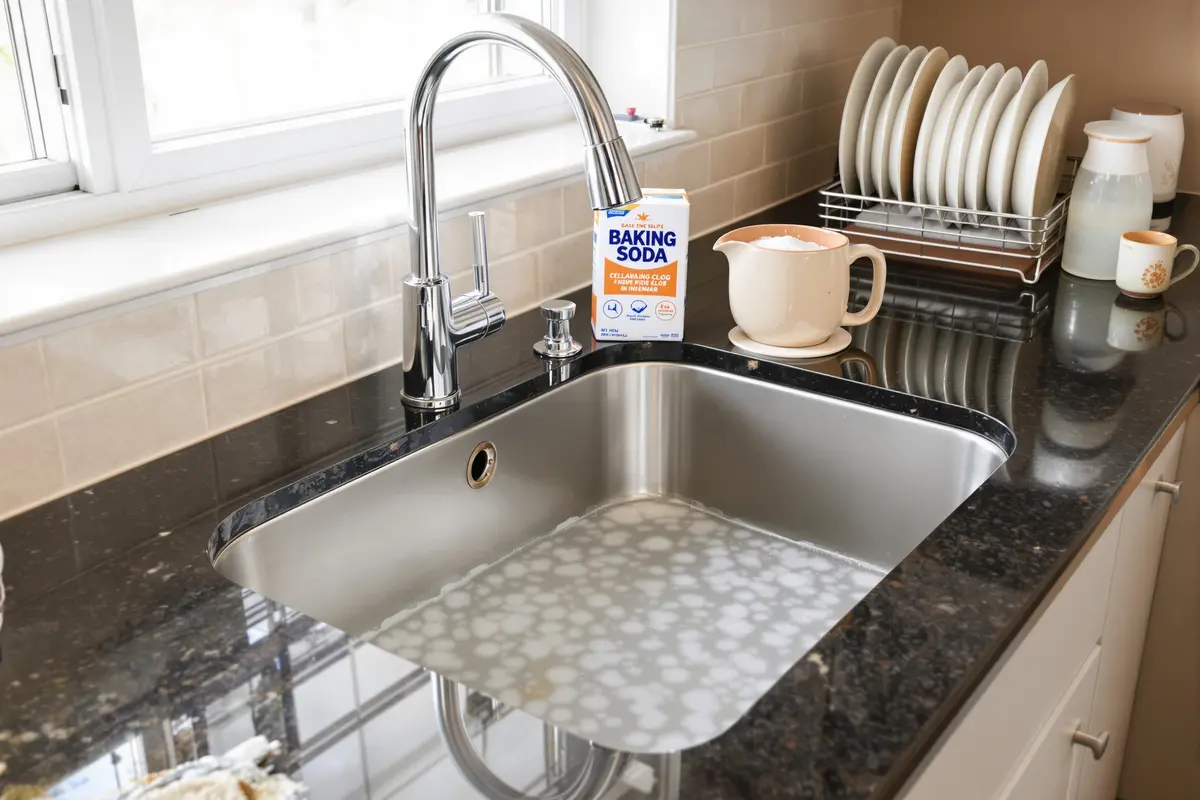
Then it happened. A small jar toppled. Some granules—maybe salt or baking soda—dropped straight into the drain. No one noticed at first. But ten minutes later, the water vanished. Just like that.
No tools, no chemicals, no plumber breaking open the pipes. Just one lucky slip. Or was it luck at all?
What really unclogged that drain?
Ask around and you’ll get a mix of answers. Some swear it was baking soda. Others are confident it was coarse salt. A few argue that vinegar played a key role. The truth? It may have been all of them—or the sequence they were used in.
Here’s the logic behind it:
- Salt: Abrasive. It can scrape away soft clogs along the pipe edges.
- Baking soda: A mild base that helps break down grease and organic matter.
- Vinegar: Reacts with baking soda to create fizz, movement, and heat—all of which help shift stubborn debris.
- Boiling water: Melts grease. Often the final push to clear the blockage.
Individually, these may not do much. But together, over time, they weaken whatever’s sitting in the drain. Eventually, the last thing poured in finishes the job—and gets all the credit.
The popular combinations people swear by
Check any DIY forum and you’ll find some repeat heroes. These methods are simple, cheap, and usually safe for your pipes:
- Method 1: Baking soda + vinegar
Step 1: Pour half a cup of baking soda down the drain.
Step 2: Slowly add one cup of vinegar.
Step 3: Wait 10–15 minutes.
Step 4: Rinse with boiling water. - Method 2: Salt + boiling water
Step 1: Pour 2–3 spoonfuls of coarse salt down the drain.
Step 2: Wait 5 minutes.
Step 3: Pour in a full kettle of boiling water. - Optional extras: A bit of lemon peel for smell, or a squirt of dish soap for extra grease-fighting power.
They’re not miracle fixes, but they’ve worked for many. Especially when used before the clog gets too severe.
Why timing matters more than you think
Here’s a twist: that final miraculous fix? It probably wasn’t magic. Experts say clogs get chipped away in layers. One attempt softens the mess. The next one agitates it. Then, suddenly, the water flows—and the last ingredient poured in takes the credit.
It feels like a miracle, but it’s often just the end of a slow, logical process. Still, our minds love a simple cause-and-effect. One product. One act. One hero.
When to stop and call the pros
These home methods can work—but they can’t fix everything.
Call a plumber if you notice:
- Multiple drains clogging at once
- Foul odors or strange gurgling sounds
- Water backing up again and again
- Slow drainage even after several home attempts
In these cases, the issue could be deeper: bad pipes, structural damage, or shared plumbing in an apartment building.
How to prevent clogs (without becoming obsessive)
Let’s be honest—no one flushes their drains every week with hot water and vinegar. But a few simple habits make a big difference:
- Scrape food into the trash before rinsing dishes
- Use a drain strainer to catch tiny scraps
- Flush with hot water after heavy, greasy meals
- Keep a box of baking soda or salt nearby “just in case”
These small steps prevent buildup, which means less drama later.
The quiet power of a simple act
The thing that made this story stick wasn’t the science. It was the unexpected success. That tiny moment when something ordinary—like salt or baking soda—turned into a quiet little victory.
It gives people hope. That maybe there’s still room in daily life for small miracles. That sometimes, the fix is within reach. Not in a toolbox. Not on a shelf in aisle 12. But right there in your kitchen cupboard.
And really, in the middle of a frustrating evening with a flooded sink, that hope is worth a lot.
Key questions answered
| Question | Answer |
|---|---|
| What was the ingredient that fixed the drain? | Hard to say for sure, but most point to salt, baking soda, or vinegar doing the final work. |
| Can kitchen staples really replace a plumber? | They can help with light, greasy clogs. But not deep or damaged pipes. |
| Are chemical drain cleaners better? | They’re stronger, but harsher on pipes. Try gentle methods first. |
| How often should I clean my drains? | Occasional hot water rinses after greasy meals work well. No need for strict routines. |
| When do I need a plumber? | If multiple drains clog or smells/gurgles keep returning, call a pro. |
Final thought: a teaspoon of belief
Whether you’re a skeptic or a DIY believer, this story reminds us of something deeper. That small actions—a pinch of salt, a little fizz from vinegar—can make a difference.
Next time your sink slows down, take a look at your spice rack before calling for backup. You might just be holding the solution already. And even if it doesn’t work, hey—that’s one more reason to finally upgrade that sink strainer.