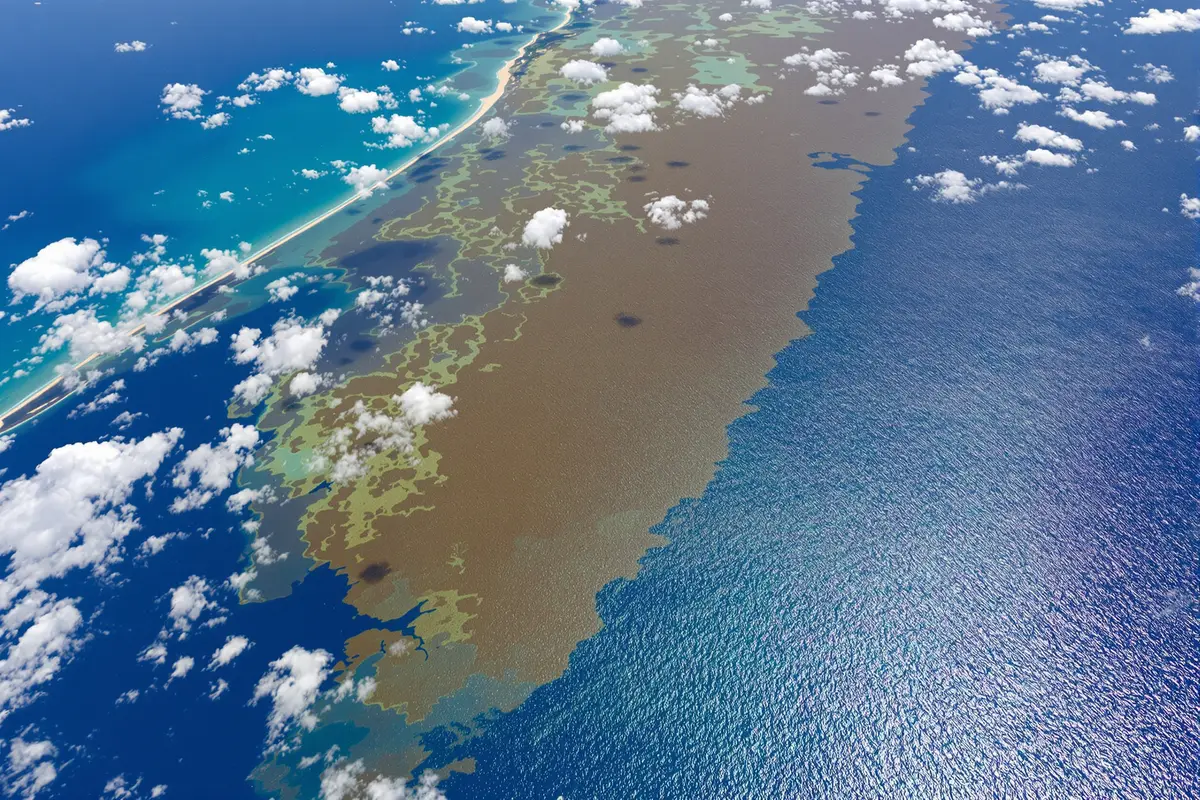
The ocean is showing us signs—and they’re hard to ignore. A massive brown ribbon is stretching across the Atlantic Ocean, visible even from space. It may look like a harmless patch of seaweed, but for people living along coastlines, it’s much more than that. It’s affecting their health, their jobs, and their environment. So what’s really going on with this strange, spreading streak?
What is the giant brown ribbon?
This ribbon is made up of sargassum, a type of floating brown seaweed. It’s clumped together in such large amounts that scientists call the stretch the Great Atlantic Sargassum Belt. In some years, it grows over 8,000 kilometers long, spanning the ocean from the west coast of Africa to the Caribbean.
Seen from above, it looks like a scar across the deep blue. Seen from the beach, it smells of rot and decay. And for fishing communities and tourists, it feels like a problem that won’t go away.
Why is the sargassum belt growing so fast?
The short answer? Pollution and warming waters.
This seaweed thrives on nutrients—especially those coming from rivers like the Amazon, Congo, and Mississippi. These rivers carry fertilizers, sewage, and waste from cities and farms out to sea. Add in rising ocean temperatures driven by climate change, and you’ve got perfect growing conditions for sargassum.
Think of it this way: we’re fertilizing the oceans from thousands of kilometers away, whether we mean to or not. And the ocean is reacting with a thick, stinking ribbon of seaweed.
What happens when it hits land?
Offshore, sargassum plays a positive role. It acts like a floating nursery, helping fish, turtles, and small organisms survive.
But up close? It becomes a problem fast.
- When it piles up on beaches, it rots and releases hydrogen sulfide gas, which smells like rotten eggs.
- People nearby report headaches, itchy eyes, and even nausea.
- Hotels lose guests. Tourists turn around.
- Fishing boats can’t get through the thick weed.
- Local governments spend millions trying to clean it up.
On the beaches of Cape Verde, mounds of sargassum reach waist-high. In Mexico and Ghana, crews work through the night to remove tons of it before sunrise. It’s exhausting. It’s expensive. And it keeps coming back.
Is this all because of climate change?
Yes—partly. Climate change is warming ocean surfaces, which helps the sargassum grow faster and travel further. But it’s not the only factor.
Industrial farming, rapid coastal development, and poor waste management are all pushing more nutrients into the sea. Combined, these factors have silently created a yearly crisis that wasn’t a problem a few decades ago.
Since 2011, the blooms have become more frequent and more massive. Scientists call this the “new normal.”
Can anything be done about it?
There’s no single fix. But some promising strategies are already in place:
- Satellite monitoring systems now predict where the sargassum will land, giving towns time to prepare.
- Floating barriers in some ports help guide the seaweed away from shorelines.
- Boats collect it offshore before it rots and release harmful gases.
- New research projects are finding creative ways to turn sargassum into useful products like fertilizer, bricks, and bioplastics.
Each of these steps can make coastal life a little easier, especially when done early. But they’re not replacements for the bigger solutions needed.
What can you do?
This may feel like a giant, global problem—something too big to fix. But even small personal choices add up.
- Check sargassum alerts when planning travel to coastal areas.
- Support hotels and businesses that invest in safe, responsible cleanup solutions.
- Avoid spreading misinformation—follow reliable ocean science sources.
- Support policies and companies that reduce nutrient pollution and invest in climate solutions.
You may not live by the ocean, but your actions still matter. The sea connects all of us more than we realize.
The ocean is speaking—are we listening?
From an airplane window, the brown belt may look almost peaceful. But step onto a beach where mounds of smelly seaweed pile waist-deep, and it’s a different story. This isn’t a one-time event. It’s a decades-long warning written right on the water’s surface.
This ribbon is no accident. It’s a visible result of human activity—farming practices, rising emissions, untreated waste. We can’t just wait for it to disappear. We have to change what feeds it.
Because the question isn’t just how much bigger the sargassum belt will get. It’s how long we’re willing to live with a line we drew ourselves—mile after mile—without ever noticing.