
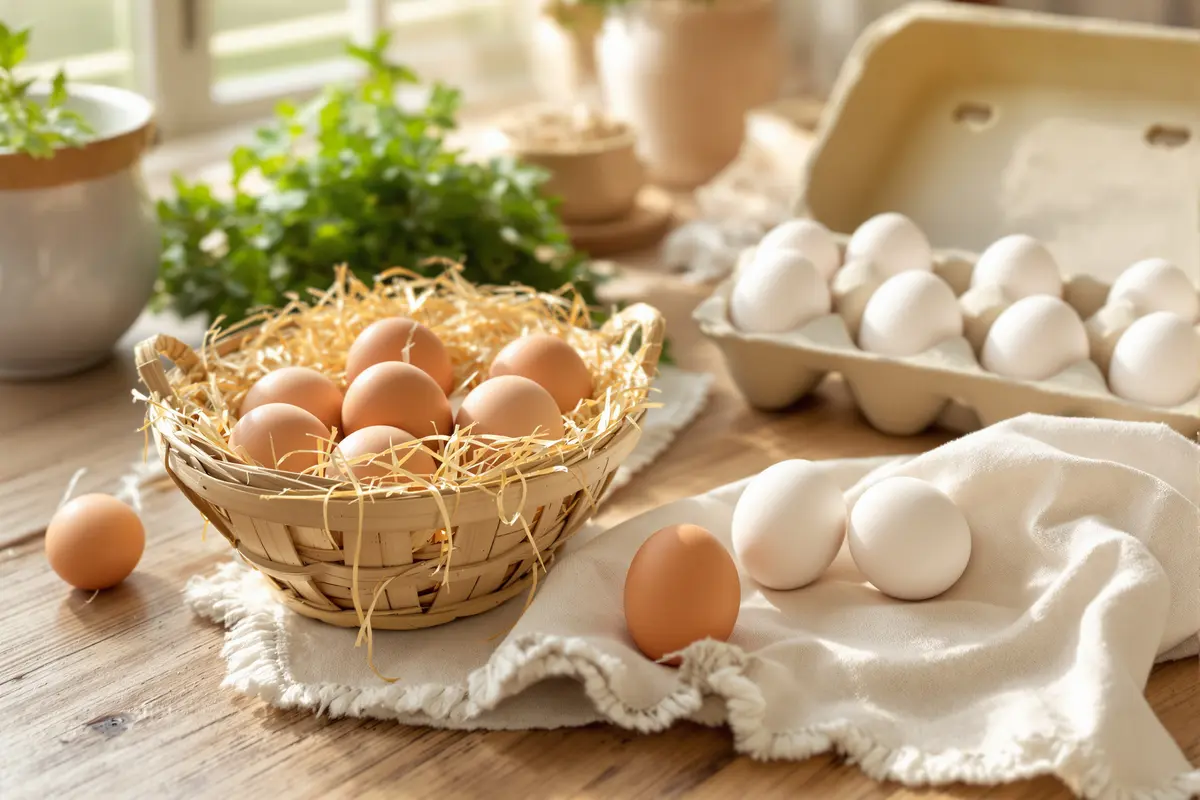
Ever stood in front of the egg shelf, debating between white and brown eggs, wondering which one’s really better? You’re not alone. Many of us carry around beliefs about eggs that we’ve never actually questioned. But here’s the kicker—it turns out most of what we think we know is wrong.
The Big Egg Color Myth
Ask a few friends, and you’ll hear it repeated: brown eggs are healthier. They’re “more natural,” “farm-fresh,” while white eggs? “Factory-made” or “cheap.” It’s a belief that runs deep. But is it true?
Not even close.
The truth is simple: egg shell color comes from the hen’s breed. Think of it like hair color. Hens with white feathers (and usually white earlobes) lay white eggs. Hens with darker feathers usually lay brown eggs. That’s it. Nothing to do with their health, diet, or how they’re raised.
White vs Brown: What’s Really Inside?
This may surprise you: white and brown eggs are nearly the same inside.
- Protein – similar levels in both types
- Fat – virtually identical
- Vitamins and minerals – almost no difference
Any minor changes in nutrition come from the hens’ diet and living conditions, not shell color. Studies and blind taste tests confirm it over and over. When freshness is the same, people can’t tell them apart by flavor or texture.
Why Are Brown Eggs More Expensive?
You’ve probably noticed it. Brown eggs usually cost more. Is it because they’re better? Not really.
The reason has more to do with the birds themselves. Hens that lay brown eggs are bigger. They eat more, which makes them costlier to raise. That cost gets passed to you.
Then marketing steps in. Brown eggs get framed as “farm-fresh,” shown in baskets with straw. It’s a look that sells. Meanwhile, white eggs get stuck with a sterile, supermarket image—even though a small local farm might sell white eggs too.
The Only Things That Actually Matter
So if egg color doesn’t tell you much, how do you choose the right eggs?
- Farming method – Check for labels like “free-range,” “cage-free,” or “organic.” These give real clues about the hen’s life.
- Freshness – Look at the best-before date. At home, try the water test: fresh eggs sink, older ones float.
- Origin – Local or small producers often offer better transparency about how their hens are treated.
Shell color tells you none of this. It’s the printed codes and farm practices that make the difference.
The Psychology of Egg Buying
Still drawn to brown eggs? That’s okay. Our brains like to link “rustic” colors with health and wholesomeness. It’s the same reason people think darker bread is always better or that “natural” means safe.
One experiment showed people rated eggs labeled “farm fresh” as tastier—even when they were the exact same eggs called “standard.” Marketing plays with our senses, and we often don’t realize it.
Redefine Your Egg Rule
Instead of judging by shell color, try setting a personal rule that aligns with your values:
- “I always choose free-range, no matter the color.”
- “I support local farmers at the weekend market.”
- “I go for the freshest eggs I can find.”
You don’t have to overthink every box. But making this one switch—looking beyond color—can shift your shopping habits in a smarter direction.
Quick Tips for Smarter Egg Buying
- Don’t judge by color—it means nothing about quality or health.
- Flip the carton over—check the date and look for any visible cracks.
- Use the water test—an easy way to double-check freshness at home.
- Understand the label—farming conditions and origin matter far more than the shell.
The Takeaway: Cracking the Real Egg Truth
Once you know the truth, you see eggs differently. You realize there’s no reason to feel bad about grabbing white ones. Or to pay extra just because a brown shell looks “healthier.”
What you’re really buying is a choice based on real values: how the hen lived, how fresh the egg is, and whether you’re supporting local food systems.
In the end, a farmer said it best: “If people knew how similar white and brown eggs are, they’d probably relax and just choose what fits their budget and conscience best.”