The icy edges of Greenland shifted this year—not just in temperature, but in meaning. When locals spotted orcas gliding through meltwater beside breaking ice shelves, dread rippled through fishing boats and coastal villages. It wasn’t just unusual. It was historic. And the government responded with something rarely heard in the Arctic: a state of emergency.
Orcas at the edge of a changing world
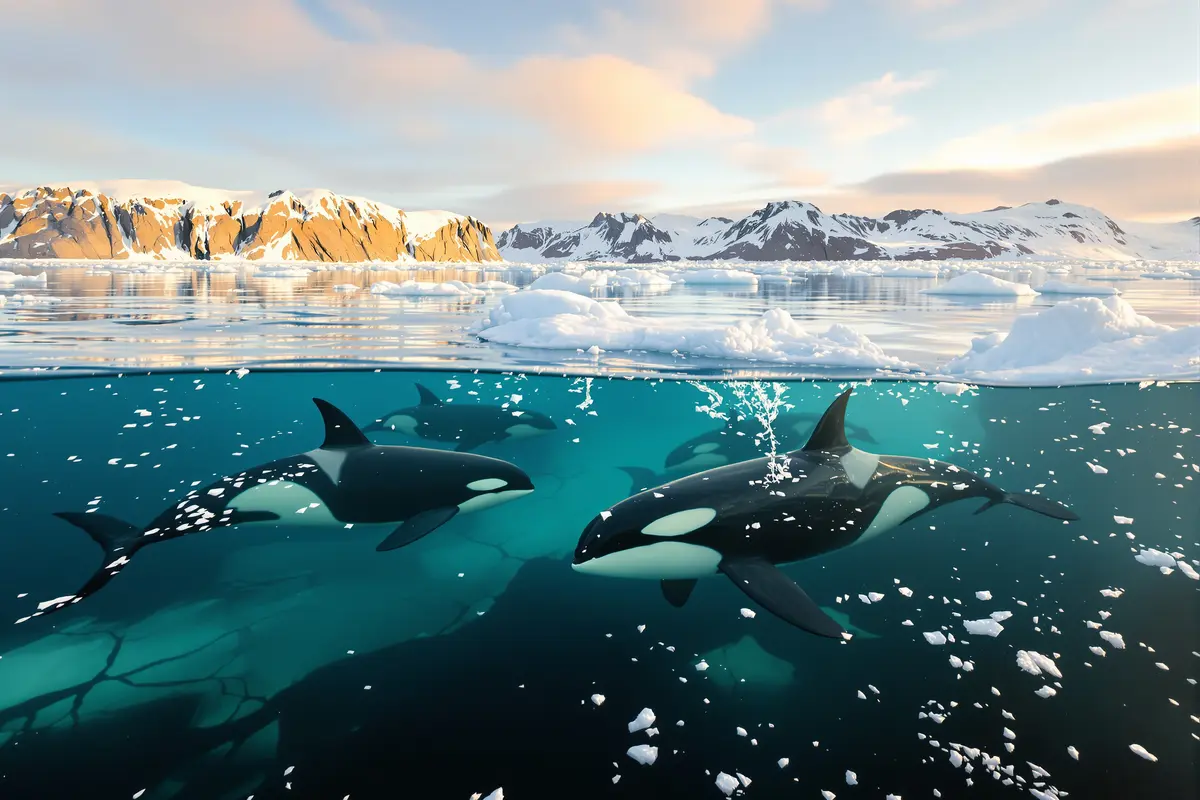
These majestic whales aren’t strangers to Arctic waters. But this time, something was off. Scientists aboard a research vessel watched them move closer than ever before to Greenland’s fragile ice edges. One moment stood out—an orca surfaced right next to a crumbling ice sheet, so close that a sheet broke off just behind her. The animal barely moved. Instead, she seemed to watch the scientists watching her.
This part of the sea used to be shut off—kept frozen year-round by thick ice. Even as recently as a decade ago, the orcas couldn’t access these hunting routes. But rising temperatures have changed the rules. Instead of firm barriers of ice, the coast is now dotted with turquoise melt pools and crumbling shelves.
Orcas are now weaving through spaces once ruled by seals, narwhals, and humans who depended on solid ice for safe travel and hunting.
Why Greenland declared an emergency
This wasn’t the kind of emergency with flashing lights or sirens. It happened by video call, when scientists, local leaders, and officials in Nuuk all agreed: this was something new. Something urgent. They released a statement with cautious words—“unusual predator activity,” “accelerated coastal melt.” But the meaning behind those phrases was clear. Nature’s calendar was broken.
A local hunter, Aputsiaq, explained it best. The fjord no longer sounded like home. Quiet cracks replaced the sharp squeak of hard ice. Where he used to find seals, he now sees orcas—three sightings in just one week. That may not sound like much, but here? It’s unheard of.
For him, the emergency isn’t about science. It’s about shorter hunting seasons, riskier travels, and uneasy change.
The science behind the sightings
Orcas are not just powerful predators. They’re smart, and they learn. When one pod finds a new hunting ground, they often return—and even teach others. That’s why biologists are worried. The melting ice shelves were once physical boundaries that shaped the Arctic’s balance. As those barriers vanish, predator-prey encounters escalate.
Scenarios that used to be rare—like orcas eating seal pups right on the ice floes—are happening more often. That’s not just tragic for seals. It could destabilize the entire food chain.
Government scientists now have access to wider monitoring tools. They’ve deployed:
- Drones to map active cracks in the ice
- Hydrophones to listen underwater
- Community log-ins to track sightings and alerts
Every piece of data helps paint the big picture before larger disasters unfold.
What it means for animals—and people
These sightings may seem like an incredible wildlife moment. But deep down, they represent something more serious. The Arctic is adapting rapidly—and not always for the better.
Seal and narwhal populations are shifting. Hunters can’t rely on traditional ice paths. And orcas? They might benefit short-term. But long-term, even top predators may struggle if prey becomes scarce due to warming seas.
Feeling far away? Here’s what you can do
This may feel like a crisis playing out on the other side of the world. But climate is connected, and action—even small steps—starts with awareness.
Here’s how you can make a difference:
- Join citizen science projects that track changes in weather or wildlife near you
- Share verified reports from Arctic researchers and avoid misinformation
- Back policies that fund clean energy and polar research programs
- Support groups working with Arctic communities and conservation teams
Most people won’t do everything. But when more of us do something, the ripple effect matters.
The orcas, the ice, and what comes next
We all carry memories of a place that changed—sometimes quietly, sometimes dramatically. The shrinking ice shelves in Greenland are one such moment, playing out in real time and seen through the dark fins of orcas carving through glowing blue meltwater.
They’re not to blame. They’re adapting. Following their instincts in a world where nature’s dependable patterns are cracking.
Scientists will gather more data. Locals will continue braving uncertain paths. But you can help simply by keeping this story alive. In conversations. At dinner tables. During policy debates.
The orcas will likely return next season. The question is what else will remain. Ice? Prey? Safe travel lanes? That’s up to us.