What if one simple, gentle move could help you stay strong, balanced, and independent well into your 80s and beyond? And what if it didn’t require a treadmill, a gym membership, or even sneakers? For many people over 70, this quiet, everyday movement may be the secret ingredient to a longer, healthier life—and it’s hiding in plain sight.
Why walking and workouts aren’t enough after 70
Daily walks and weekly workouts are great. They support your heart, keep your mood up, and give you a sense of routine. But here’s the catch—
They don’t prepare you for life’s real movements. Things like getting up from a low chair, picking something off the floor, or turning quickly while holding a bag of groceries.
This is where many older adults get stuck. They “exercise,” yet still struggle with stairs or dread getting off the couch. That’s because most exercise plans miss the actual patterns your body needs to stay fully functional.
The forgotten motion that protects independence
There’s one humble move that shows up again and again in people who stay sharp, coordinated, and mobile in late life: the ground-to-stand transition.
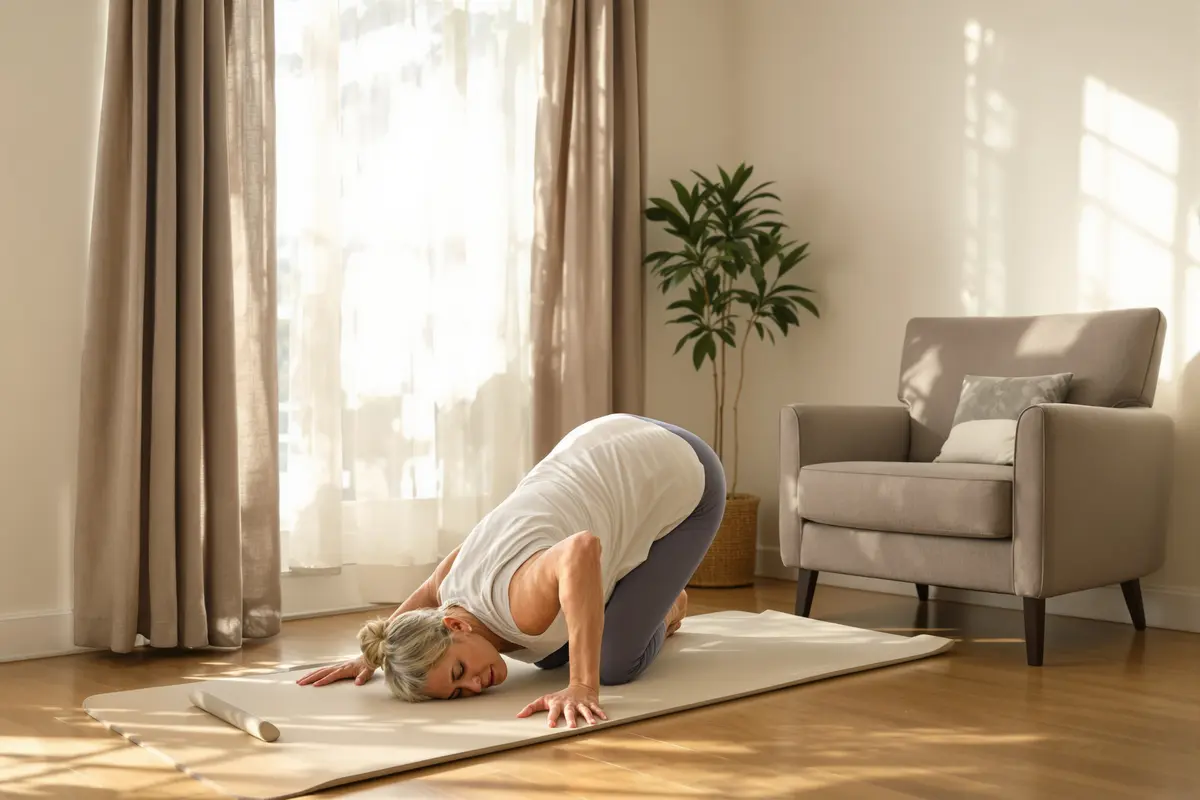
It sounds simple—going down toward the ground and then standing back up. But done gently and often, this pattern builds strength, balance, coordination, and confidence. It trains key muscle groups while firing up your nervous system for real-life situations.
Experts call this move “functional strength.” It’s not about lifting heavy weights. It’s about being able to get off the floor, rise from a chair without using your hands, and carry light loads with control. It’s the strength that protects your freedom.
The science is clear: little daily movements matter
One well-known study from Brazil looked at older adults’ ability to sit and rise from the floor without using arms or knees. Their score actually helped predict long-term survival. No machines. No intensity. Just the ability to change levels with control.
Why does this work so well? Because real life happens across many directions and levels. Not just in a straight line like walking. This pattern trains ankle stability, hip mobility, core strength, and even faster reaction time if you slip or lose balance.
In contrast, many seniors design “easy” environments—raising chairs, storing shoes high, avoiding the floor—so their bodies slowly forget how to move fully. Then, one fall arrives and their bodies can’t respond.
How to start ground-to-stand practice today
The best part? You don’t need a workout plan. Just a few minutes a day, built into your routine.
Beginner options
- Use a slightly lower chair: Stand up slowly, using your legs more than your hands. Do a few controlled reps.
- Try a half-kneel with support: Place one knee on a pillow using a wall or chair for balance, then rise.
Comfortable with floor work?
- Place your hands on a chair. Lower one knee, then the other to a soft surface. Pause. Then come back up.
- Spend 30–60 seconds sitting or kneeling on a cushion, then return to standing as smoothly as possible.
Important safety tips: Use support like armrests, railings, or a firm friend’s shoulder. Avoid pain. Frequency matters more than perfection.
A weekly movement menu that keeps aging at bay
| Movement | How Often | Why It Matters |
|---|---|---|
| Chair stand with little or no hand support | Once a day | Builds leg power, confidence in transitions |
| Half kneel to stand, each side | Three times per week | Strengthens hips and balance |
| 1-minute floor sit or kneel | Once a week | Keeps full-range function and confidence alive |
FAQs: what you need to know
Is walking still important?
Absolutely—but it only trains you in one direction. Ground-to-stand builds strength and balance for everyday life.
What if my knees are bad?
Start small. Use a higher seat, cushions, and plenty of support. Every gentle repetition still helps your joints remember their job.
How often should I do this?
Think tiny, frequent practice. A few minutes daily beats an exhausting weekly effort.
What if I’m afraid of falling?
Stay safe. Use walls, sturdy furniture, and soft surfaces. Start slow. Over time, confidence grows.
Do I still need the gym?
The gym can be great—especially for bone health and social time. But ground-to-stand patterns fill a crucial daily gap even the best gym session can miss.
The real goal: moving well no matter your age
Long life is great. But what about a life you can move through freely? A life where you choose where to sit, how to bend, when to get up.
That’s the promise of this daily movement. Not flashy. Not difficult. Just powerful in its simplicity—and specific to the kind of strength that really matters after 70.
Try weaving it into your normal day: Pause for a short kneel when gardening. Sit on something low to sort the mail. Touch the floor to pat the dog. Then gently, confidently, come back up.
That’s not exercise. That’s healthspan training.