Imagine a visitor from another solar system barreling through ours—a frozen traveler older than our planet, hurtling past the Sun. In 2019, that’s exactly what happened. A mysterious object named 2I/Borisov became the first confirmed interstellar comet to pass through our solar system. And eight different spacecraft managed to catch it in action.
What they saw was beyond what anyone expected.
What makes 2I/Borisov so special?
This comet didn’t start its journey anywhere near the Sun. It came from far beyond our solar system, flying in from deep space with a speed and path that confirmed it wasn’t from around here. Spotted in August 2019 by amateur astronomer Gennady Borisov, it was quickly labeled the second known interstellar object (after ‘Oumuamua) and the first clearly visible comet from interstellar space.
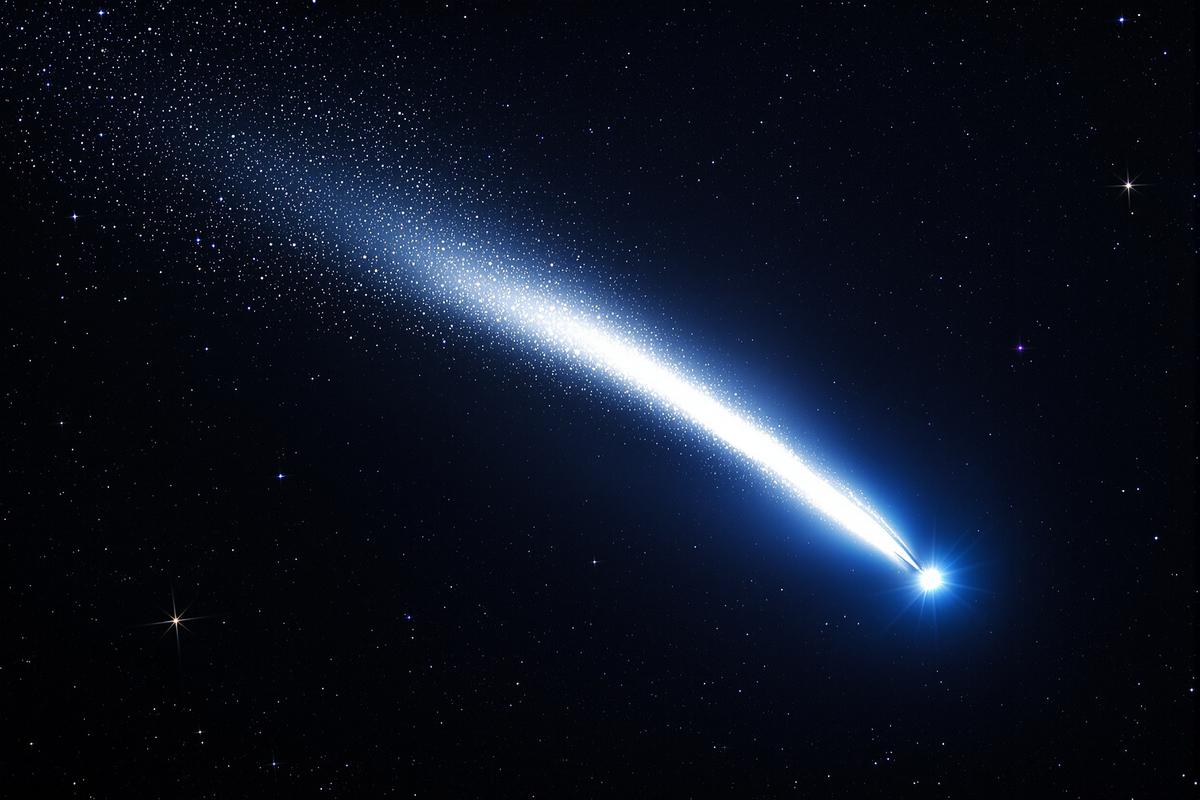
Unlike ‘Oumuamua, which had no tail and looked more like a rock, Borisov had all the features of a classic comet—just… supercharged.
How eight spacecraft managed to chase it
You might think spacecraft need to be nearby to capture good data. But in space, many eyes are always watching, often at a distance. Here’s how eight different missions managed to observe the flying space visitor.
- Hubble Space Telescope: This legend zoomed in and showed how fast Borisov was shedding material. Its tail stretched over 160,000 kilometers—longer than the distance between Earth and the Moon!
- Solar and Heliospheric Observatory (SOHO): Originally meant to watch the Sun, SOHO caught the comet as it lit up against the solar background.
- Swift Observatory: Using ultraviolet light, Swift revealed details of the gases the comet was releasing—like cyanide and water vapor—clues about its distant birthplace.
- Spitzer Space Telescope: Though nearing the end of its mission, Spitzer captured infrared data, helping scientists check the comet’s temperature and size.
- ALMA (Atacama Large Millimeter/submillimeter Array): Located in Chile, ALMA isn’t a spacecraft, but its highly sensitive radio dishes saw how fast carbon monoxide was spraying from the comet—nearly 60 times more than a typical solar system comet!
- CHEOPS: This European telescope typically studies exoplanets, but it paused to peek at Borisov, measuring its brightness and rotation.
- NASA’s Deep Impact spacecraft: Although no longer active, data from its flybys of other comets helped scientists compare Borisov’s behavior.
- ESA’s Rosetta archives: Similar to Deep Impact, Rosetta wasn’t asked to observe Borisov directly, but its historical data gave important insights when studying a comet this alien.
A comet unlike any we’ve seen
So what made Borisov stand out? First off, it flew in almost perpendicular to the plane of the solar system. That’s not a common route—most comets orbit like planets do. Also, it moved faster than anything local. It entered our solar neighborhood going over 177,000 kilometers per hour.
Perhaps the wildest part was how active it was. Borisov didn’t just glow—it erupted. Its coma (the fuzzy cloud around its core) was unusually bright, meaning it was shedding tons of dust and gas, even outperforming most solar comets.
What the comet told us about other solar systems
Studying Borisov was like opening a time capsule from a completely different world. Spectral analysis revealed it was rich in carbon monoxide, dust, and cyanide—all common in comets here, but not always in such large amounts. This suggests comets from other systems might form in colder, more distant regions than ours—or behave differently altogether.
Some even say that Borisov reminded them of the earliest building blocks of our own solar system, just with a twist. It’s made of the same stuff, but in different proportions. That little difference hints at how wildly diverse alien solar systems may be.
Will we ever see another interstellar comet?
The chances are better than ever. ‘Oumuamua came in 2017. Then Borisov in 2019. With newer telescopes coming online—like the Vera C. Rubin Observatory—we might start spotting interstellar visitors more often than we thought possible.
Next time, we may even have a probe ready to greet them.
Why this matters
It’s not just about seeing something rare. Interstellar comets like Borisov are messengers from the unknown. Every grain of dust they carry holds clues about the chemistry, conditions, and history of faraway star systems.
Eight spacecraft watching the same object gave scientists a kind of 3D look into its behavior, structure, and origin. And what they found shook up our understanding of how “normal” comets really are.
Turns out, the more we learn from outsiders… the stranger home starts to look.